Wild Mongolia
August 23 - September 6, 2026
I've been fascinated by tales of Marco Polo, Genghis Khan, and the Silk Road since I was young. Mongolia would be a challenging place to explore on my own: very few roads are paved, distances are vast, dirt tracks are unmarked and rough. I found a reasonably-priced small group tour with a great mix of scenery, hiking, culture, history, and interaction with local people.
Highlights of my 15-day Wild Mongolia tour included ancient Buddhist temples, volcanic craters, high mountain lakes, wild horses, hot springs, nomadic herder families, and the list goes on. The trip was physically demanding, so it was a good one to do now, while I have the mobility and stamina. Late August is the perfect time to go, with good weather and fewer tourists than in peak summer season.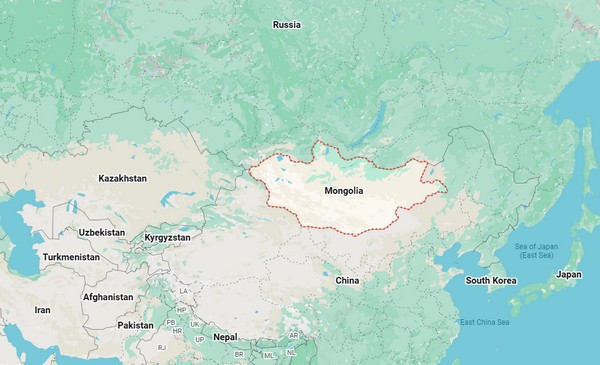
Mongolia is sandwiched between Russia and China. It's approximately the size of Alaska. Although the latitude is the same as Seattle, it has an extreme continental climate with long, frozen winters and short, mild summers.
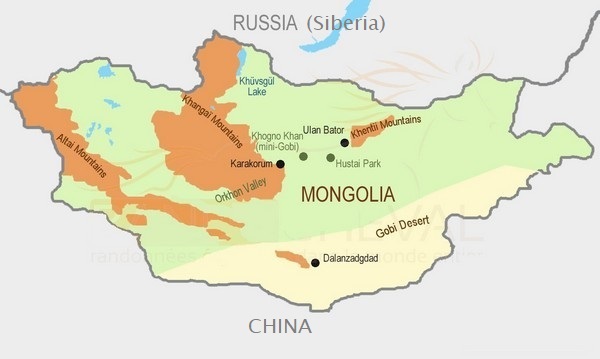
Mongolia has desert, grasslands, and mountains. We got to see a little of each, but we did not go into the Gobi desert in the far south. The average altitude is over 5000 feet, making it one of the highest countries in the world. Over 80% of the country lies above 3,280 feet.
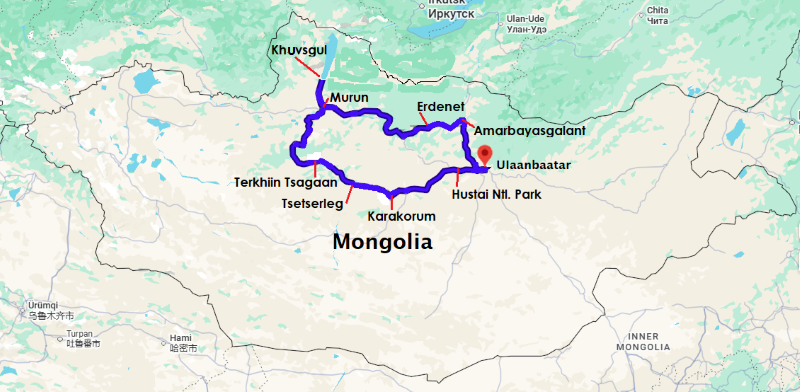
The 1500-mile tour focused on north-central Mongolia.
Ulaanbaatar (Ulan Bator)
This city of 1.75 million (half of Mongolia's population) is the coldest capital city in the world, often dropping to -40 fahrenheit in the winter. In late August the weather was idyllic. I really enjoyed walking around the city; it's laid back, friendly, and clean, with good sidewalks, all the amenities of any modern city, and ubiquitous English.
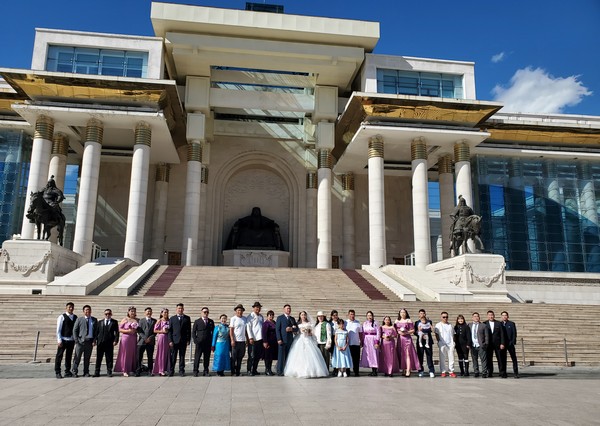
I had a day to explore before the tour started, and headed for Sukhbaatar Square at the heart of the walkable downtown. A large statue of Genghis Khan (pronounced Jengis) sits on the steps of the Government Palace. He's revered as the founder of Mongolia and this is a popular place for wedding photos.
The Korean embassy was hosting a Korea festival in the square. This K-Pop group was a huge hit with the crowd.
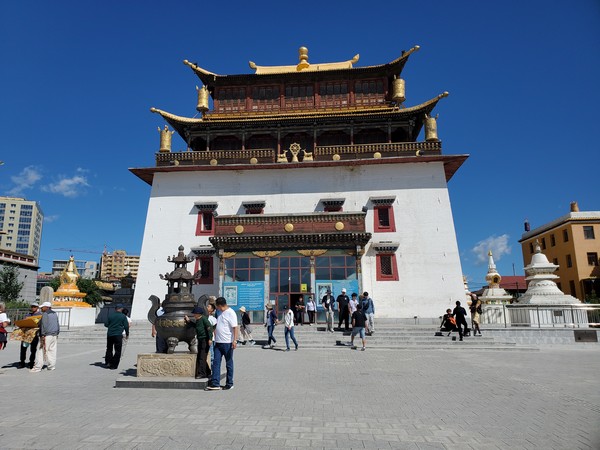
I walked to Gandantegchinlen Monastery, the center of Mongolian Buddhism, where about 100 monks live and study on a large campus with multiple buildings. This is the Janraisig Temple. Mongolia practices Tibetan Buddhism blended with shamanism and animism (reverence for both living and non-living entities, such as earth, sky, and mountain).
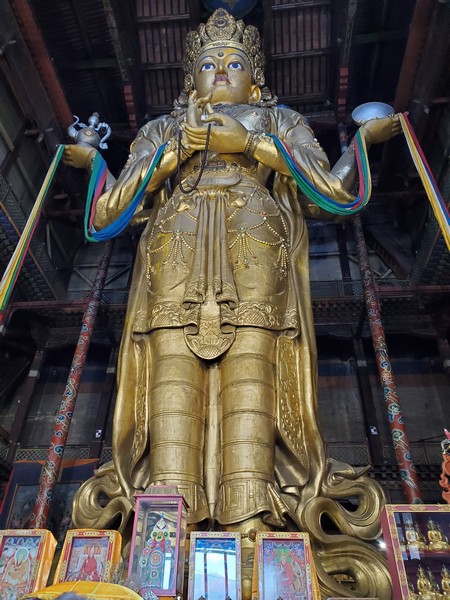
Inside the temple is a breathtaking 87-foot-tall gilded sculpture of the Bodhisattva of Compassion. Buddhism was brutally repressed by the Soviets in the 1930s, and has flourished since Mongolian independence in 1990. This monastery was closed by the Soviets but kept intact as a propaganda tool. Many others were destroyed, and thousands of monks were executed.
Spinning prayer wheels has many benefits, including sending healing energy, peace, and good intentions out into the universe for all living beings.
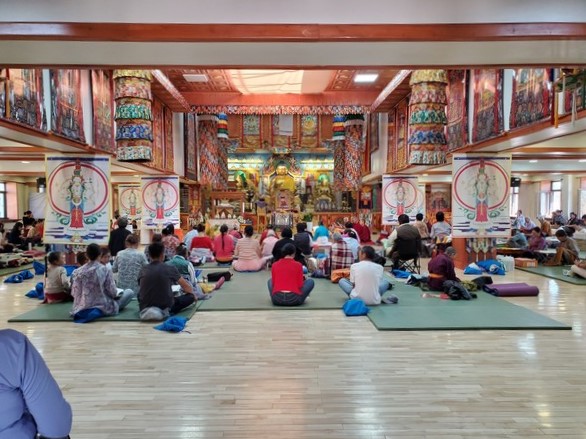
In another building, I was invited to join this silent Compassionate Buddha practice, so I took off my shoes and sat a while.
Monks chant each morning in the modern Great Hall. The yellow hats are worn by monks of this particular sect of Tibetan Buddhism.
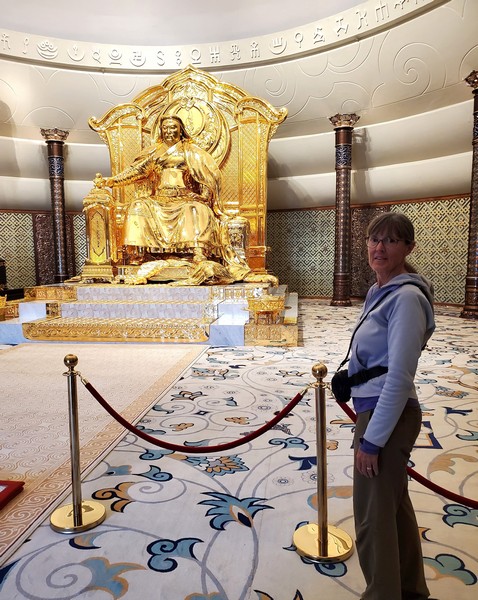
I also visited the Genghis Khan museum. He was a relatively enlightened ruler for his time (early 1200s). He united the warring steppe tribes; practiced and enforced strict religious tolerance; instituted a unified legal code that applied to everyone equally, including elites and chieftains; outlawed torture; and banned the kidnapping and selling of women. He promoted commanders and officials based on ability and loyalty rather than aristocratic birth or family lineage. He promoted international commerce, protected merchants, opened secure trade routes across the Silk Road, and implemented a robust communication system providing fresh horses at regular intervals, allowing messages to move quickly.
The Tour Begins
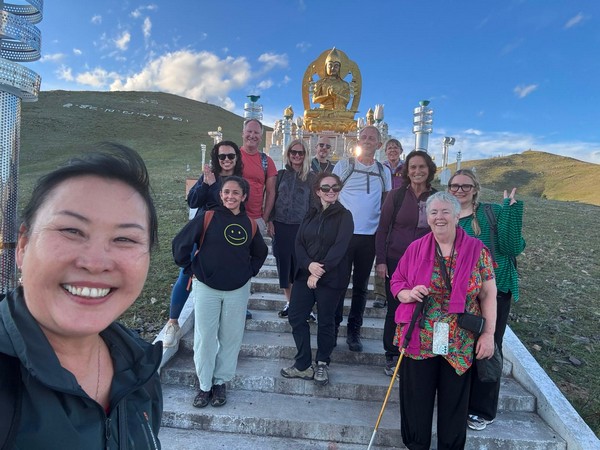
There were 11 of us on the tour, plus our lovely guide, Oyuka, and two drivers (not pictured here). The group ranged in age from 33 to 70. Two Australians, two New Zealanders, two Canadians, and five Americans. Three men and eight women. Two couples and three married women traveling without their spouses. (Here we are at Amarbayasgalant Monastery.)
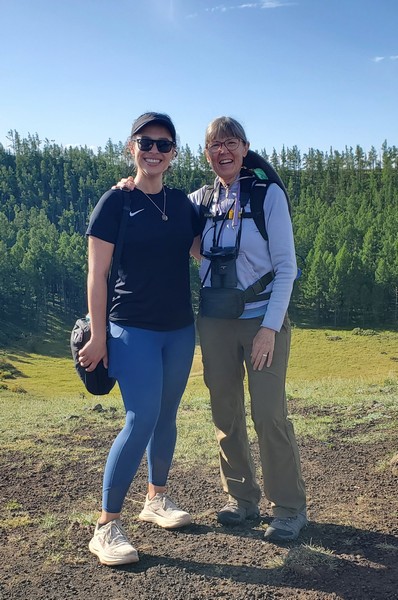
My ever-cheerful and smiling roommate, Jessi from Australia. She was a delight.
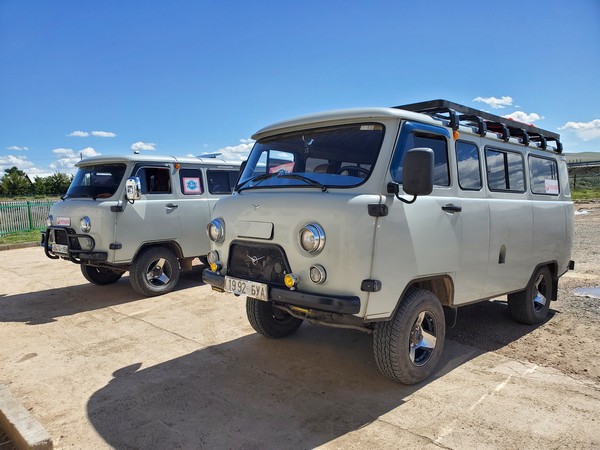
Our two Russian "Furgon" vans. These four-wheel-drive beasts can go just about anywhere.
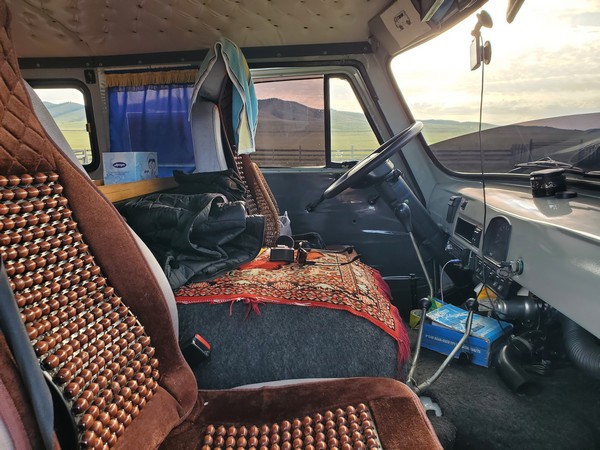
The cockpit
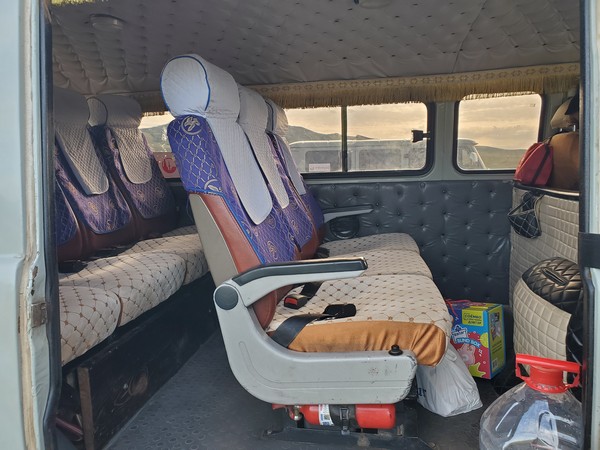
The vans were snug but comfortable.
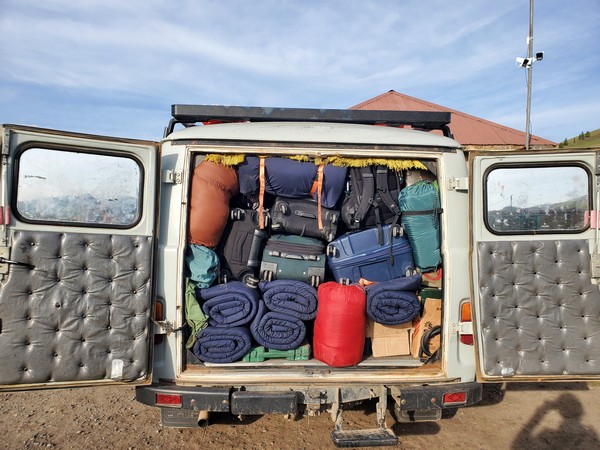
The drivers somehow managed to cram in all the luggage each day.
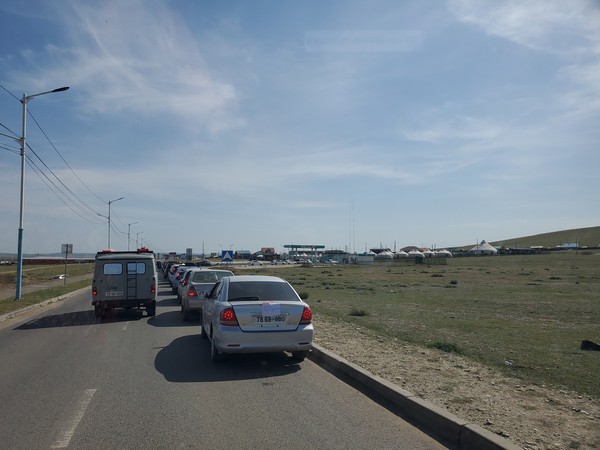
The line on the right are cars waiting to buy gas. There was a gas shortage (due to reduced Russian supply and high summer demand) and lines were often one to two hours long. While we were off exploring a market or museum, the drivers would often go off to find gas.
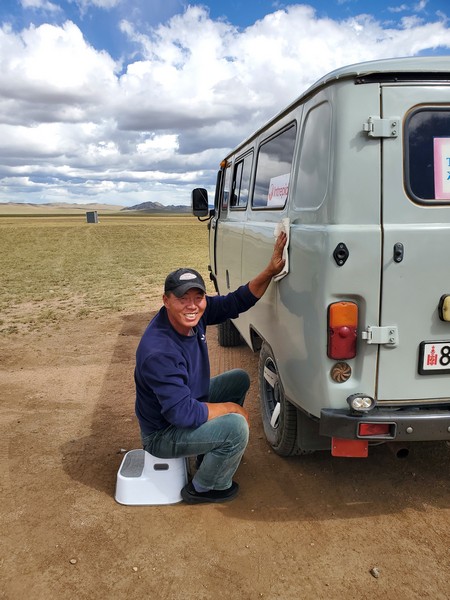
The drivers own their own vans and take meticulous care of them. Ganba has been driving tourists for over 20 years.
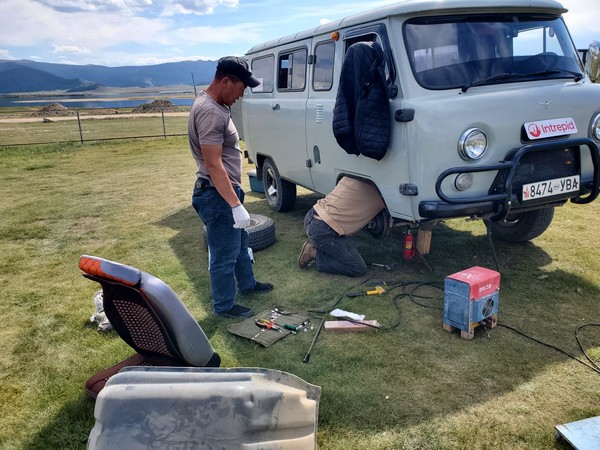
The multi-talented drivers could do their own repairs, including welding if needed!
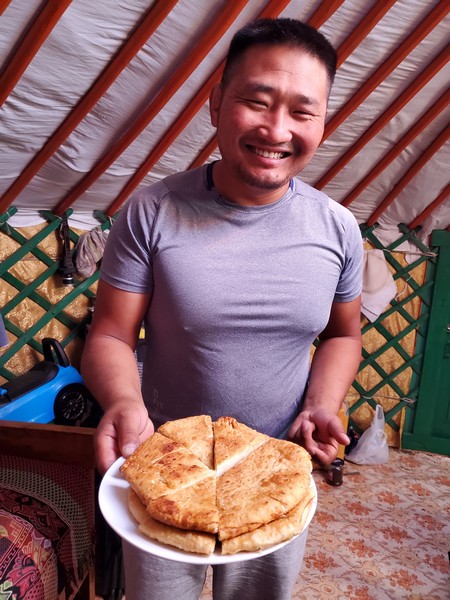
Both drivers could also cook. Here is Jagga serving us hot fry bread for breakfast one morning. He's been a tourist driver for 10 years.
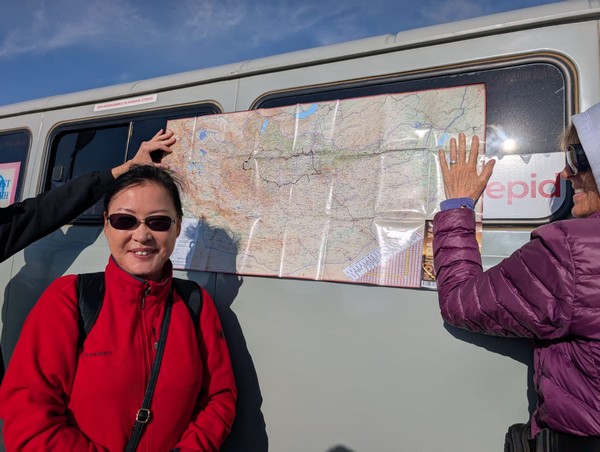
Each morning we'd look at the map to see where we were headed that day. The black line is our total route.
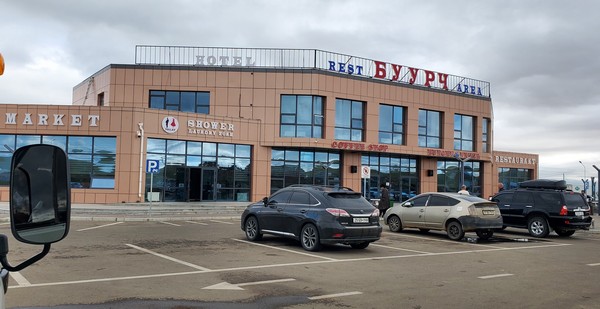
We'd stop every two hours or so for snacks, toilets, and stretching. There were rest areas like these along paved roads, but much of the time there were no facilities, just "nature toilets," as our guide called them.
Amarbayasgalant Monastery
On our first day we drove 220 miles to Amarbayasgalant Monastery, a UNESCO World Heritage site built in the early 1700s.
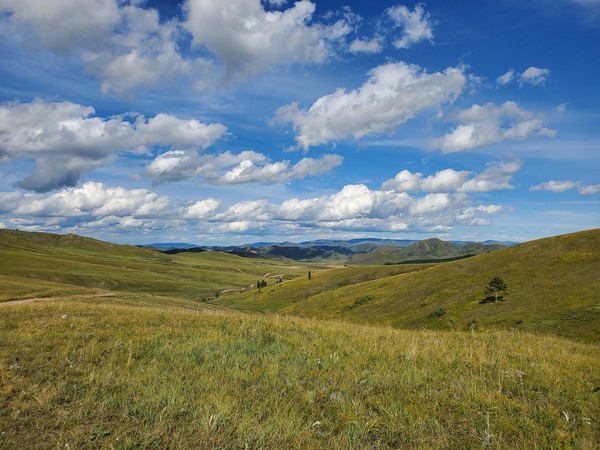
The scenery was gorgeous, with miles of rolling hills covered in wildflowers.
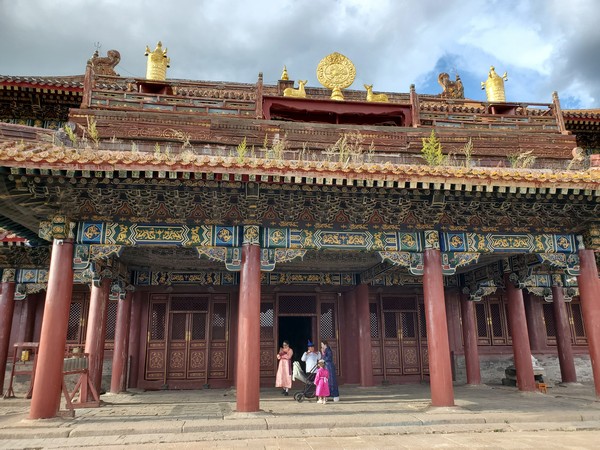
Amarbayasgalant is one of the largest Buddhist monastic centers in Mongolia and one of the very few to have partly escaped destruction during the Stalinist purges of 1937-39.
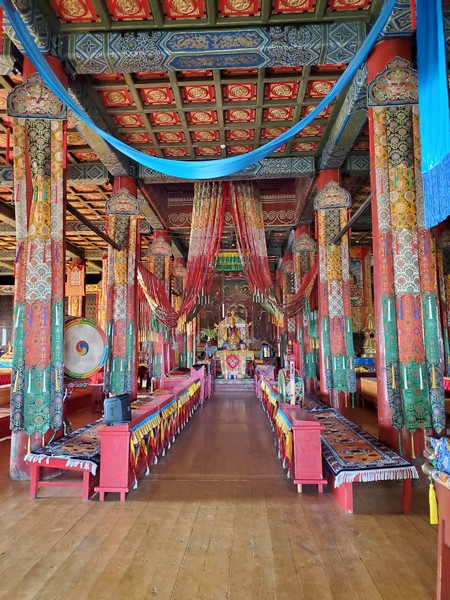
The interior of a Tibetan Buddhist temple is a sacred environment designed to mirror the enlightened mind, speech, and body of the Buddha and to welcome local spirits. Monks and laypeople gather in the central room to chant, pray, and meditate. The altar holds sacred objects. Side tables are for butter lamps, water bowls, and burning incense.
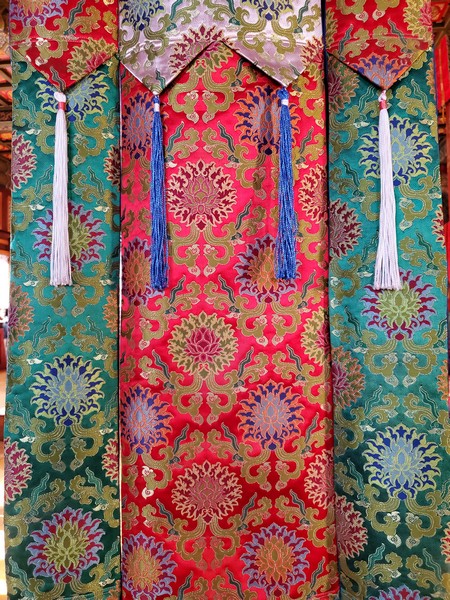
Richly-colored cloths and rugs are hung and draped everywhere. The colors have symbolic meanings: blue for sky and space, white for air and wind, red for fire, green for water, yellow or gold for earth.
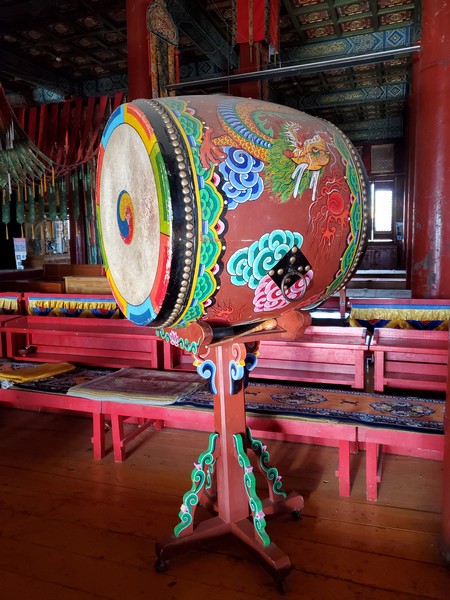
Temple drum used during ceremonies, chanting, and meditation
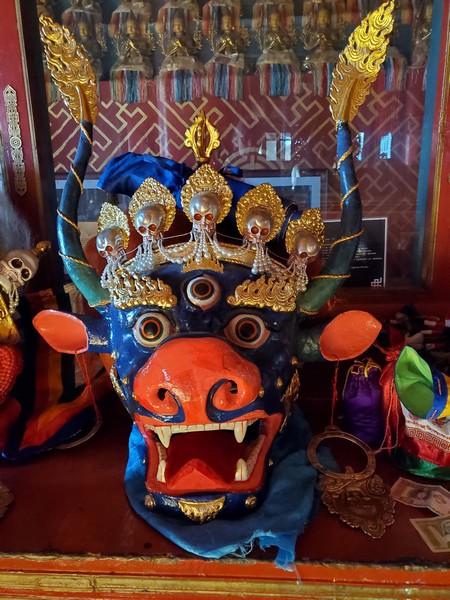
Protector, or guardian, deities help ward off negative energy and ignorance. The fierce face depicts "enlightened compassion cutting through deep obstacles." The Third Eye represents the wisdom of omniscience and seeing all truths. The five skulls signify victory over the five poisons (ignorance, attachment, aversion, pride, jealousy).
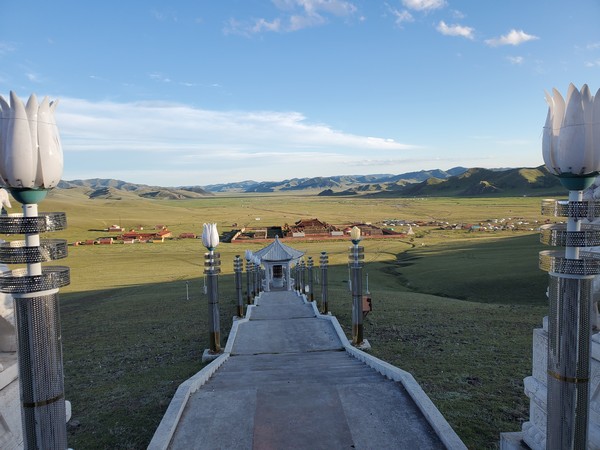
The monastery lies at the head of a long river valley in a sacred mountain grassland environment.
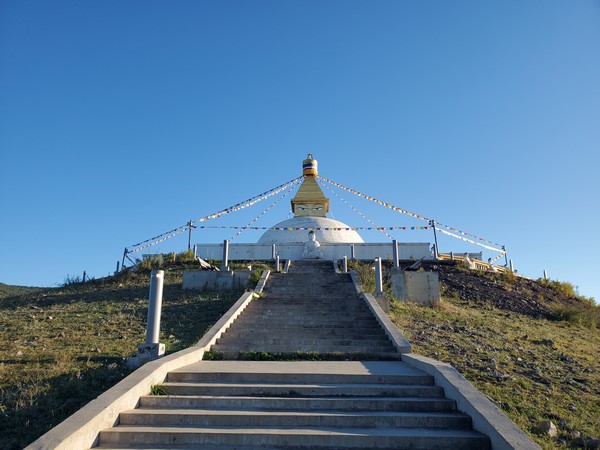
The hillside stupa serves as a pilgrimage site for prayer and meditation. You can look into the eyes and ask for your sins to be forgiven.
Accomodations
Ger (sounds like gair) is the Mongolian word for yurt. Other than two nights with nomad families, we slept in Tourist Ger Camps, which provided cozy beds, well-appointed bathrooms, and hearty meals.
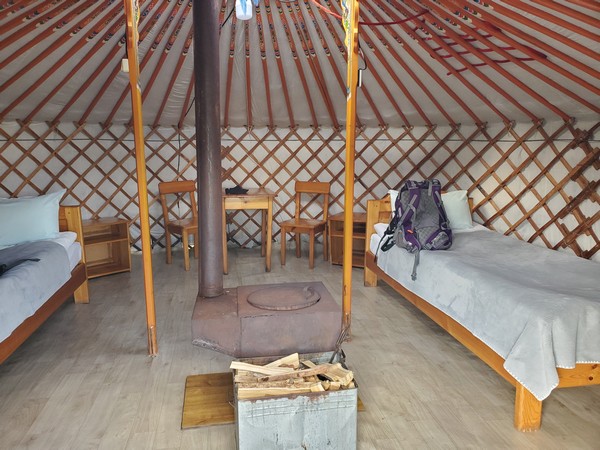
Inside a typical tourist ger. Gers are perfectly adapted to nomadic life. Families move four to five times a year and gers can be assembled or disassembled in one to two hours and moved with a truck or cart. A small wood stove keeps them toasty in cold weather. (Some places we stayed had electric heaters.)
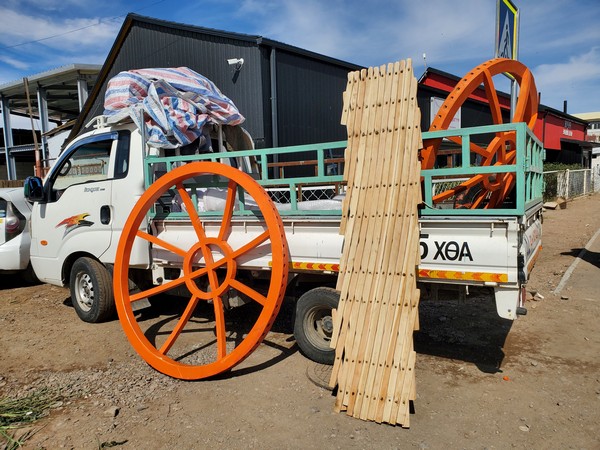
Ger parts for sale in a market
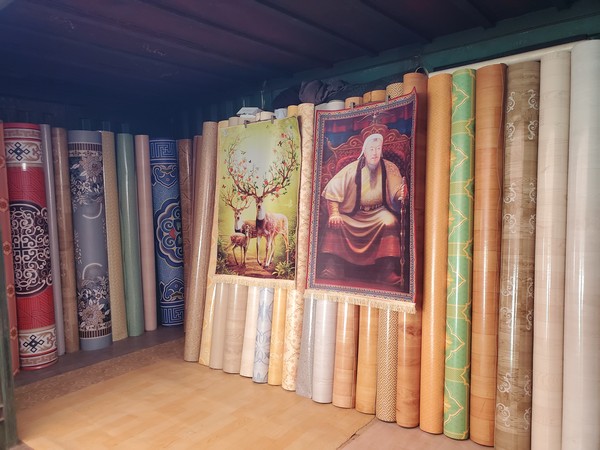
These days a piece of linoleum from the local market is often used for the floor. Rugs may be laid on top.
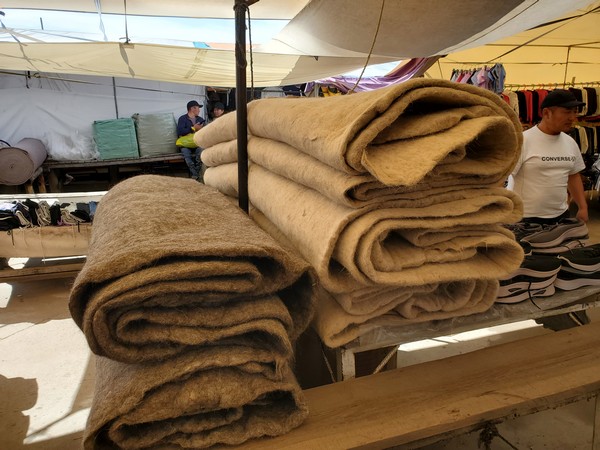
Rolls of felt for sale in a market. In the old days people made their own from sheep wool. The felt is wrapped around the lattice framework, covered with waterproof canvas, and tied in place.
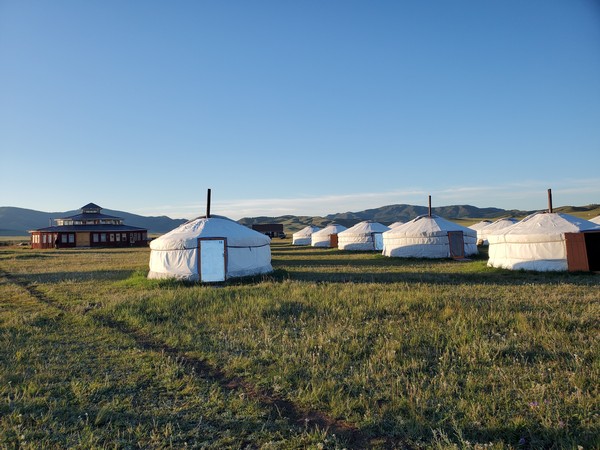
Typical tourist ger camp, with a cluster of gers (doors face south), a dining area (round building to the left), and bathroom building (behind the gers).
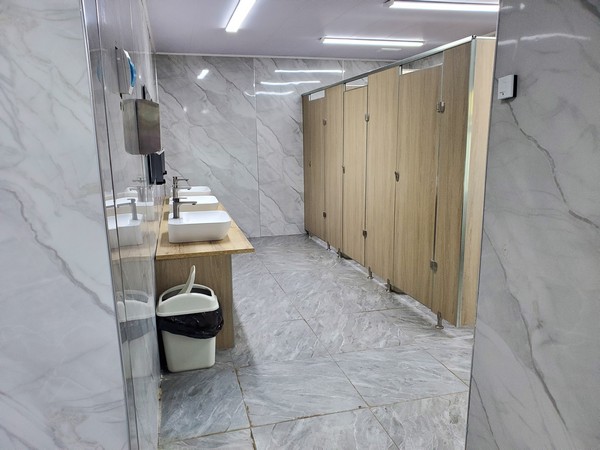
Camp bathrooms were modern and spotless, with flush toilets, running water, and showers (often with hot water).
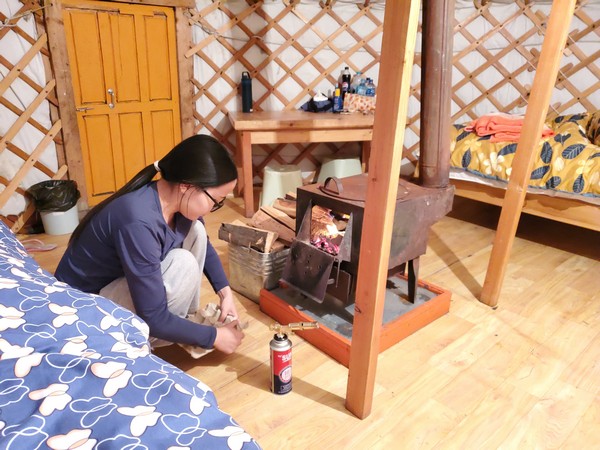
On chilly nights, they would light a fire for us. Nighttime temps were often in the mid to low 40s.
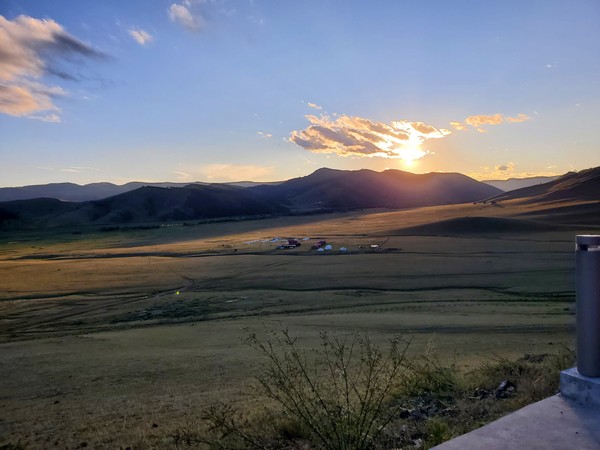
Our camp at Amarbayasgalant in the early morning. It was so peaceful and quiet!
Food
Traditionally, Mongolians subsisted on meat and dairy products. These days fruits, vegetables, and starches are common as well, especially for tourists. We were served breakfasts and dinners at the tourist camps, and ate lunches in restaurants along the road. Mongolian food is not highly seasoned, and the meat tends to be tough and fatty. Still, I liked most of what I was served.
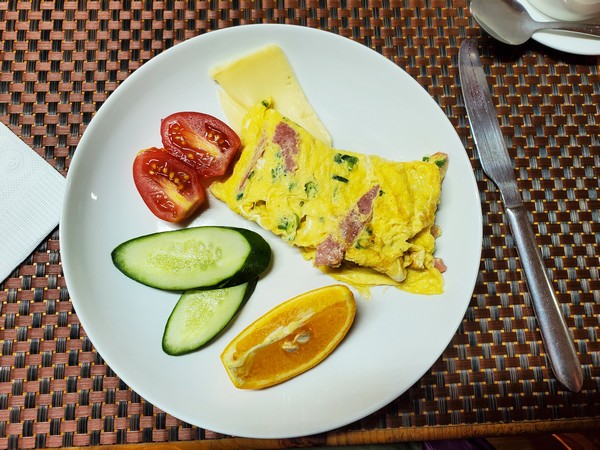
A typical plated breakfast included fried or scrambled egg, some kind of meat or cheese, fruit and vegetables, bread, jam, coffee, tea, and juice.
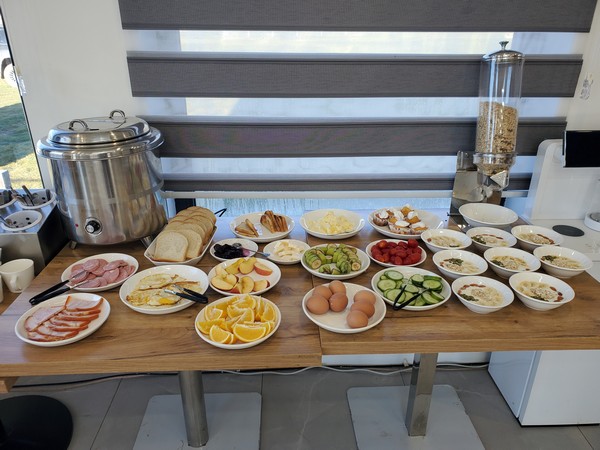
This buffet breakfast included yogurt and muesli bowls. Mongolian yogurt is creamy and not tart.
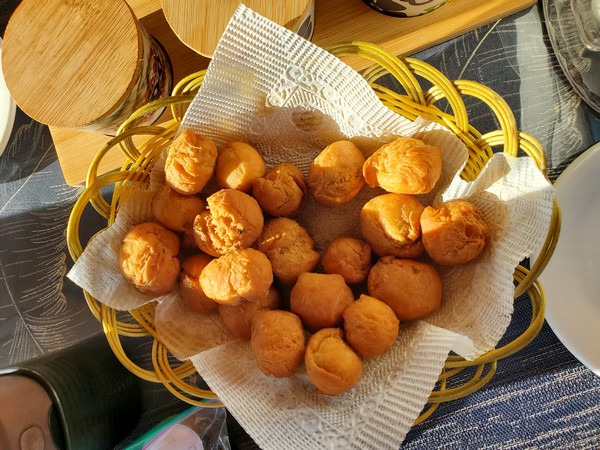
Boorstog are like donut holes. Not too sweet, crispy on the outside, pillowy on the inside. Served warm for breakfast. Irresistible.
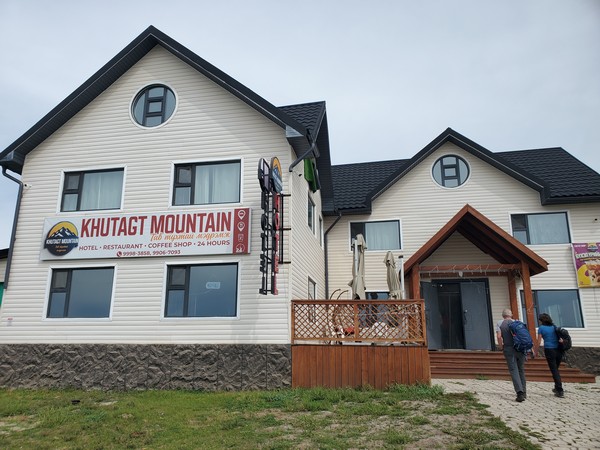
Typical restaurant where we'd stop for lunch along the road.
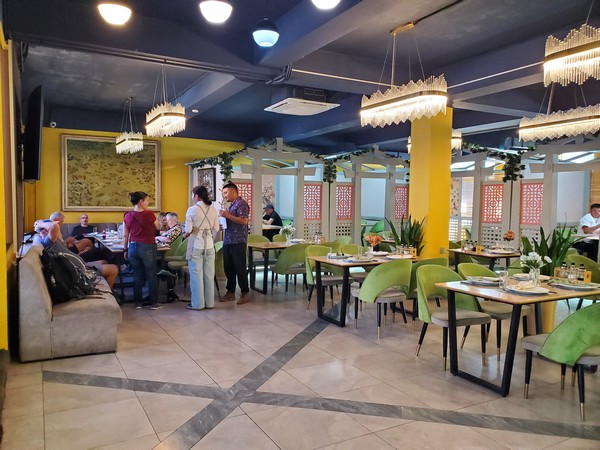
Typical restaurant interior: clean and modern
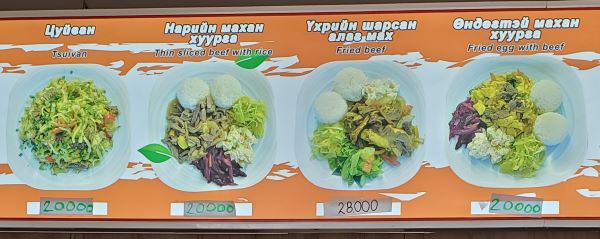
Typical restaurant options (20,000 tugrug is about $5.50)
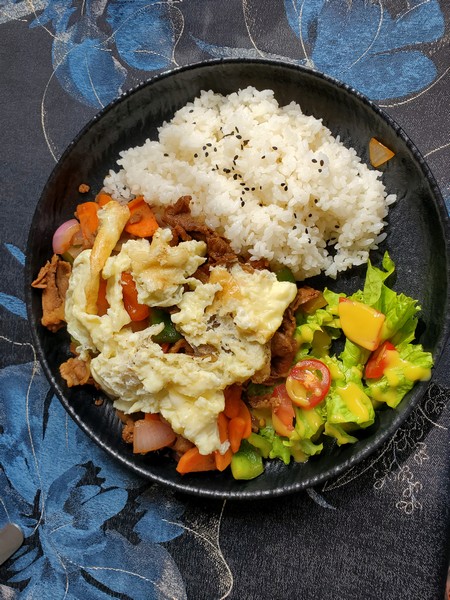
This is eggs with beef, vegetables, rice, and salad.
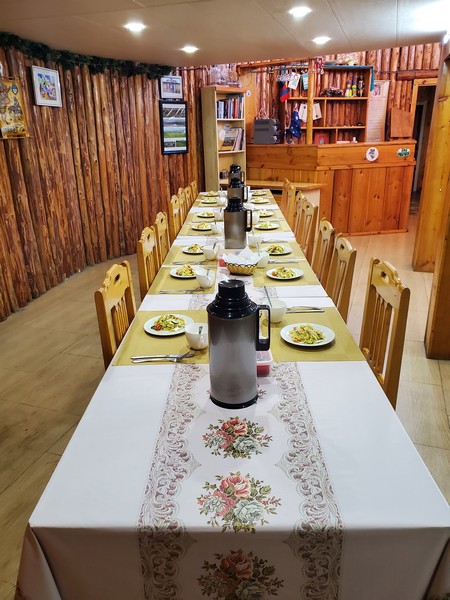
Our dinner tables at tourist camps often had a preset salad, and always jugs of green tea.
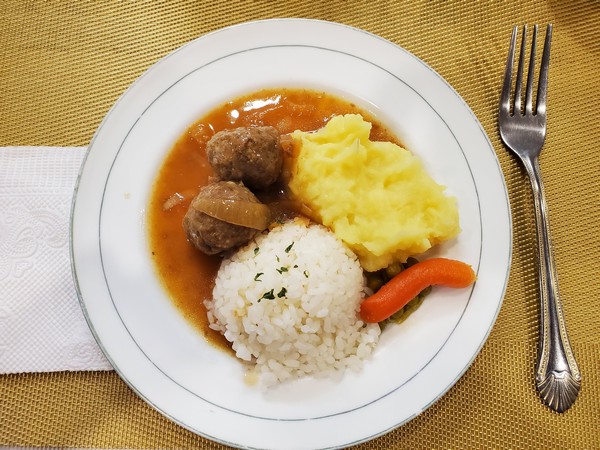
A typical dinner included beef (chunks or ground), starches (pasta, potato, rice, or bread), and vegetables, often with a starter salad or soup. (This picture shows a half portion, which I asked for because I couldn't eat a full serving and didn't want to waste food.)
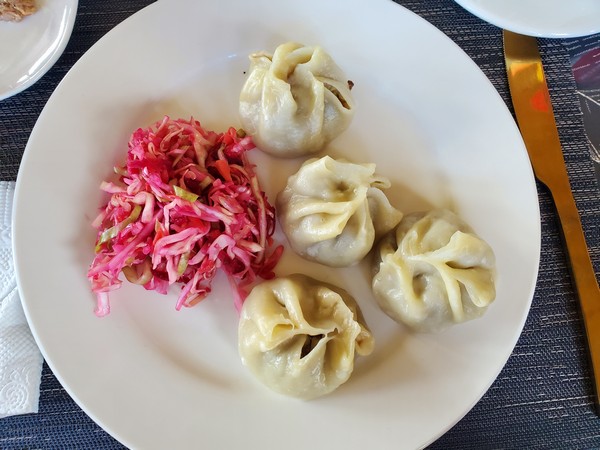
These are steamed dumplings, filled with a meat and onion mixture. You bite them in half, carefully slurping out the flavorful broth.
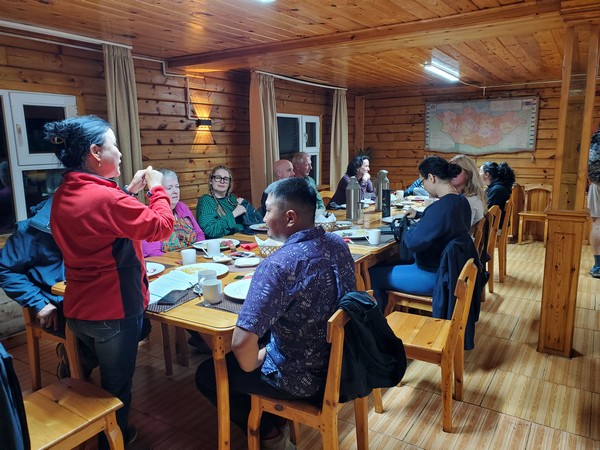
Each evening our guide would tell us what would be happening the next day. The most important information: what time is breakfast?
Erdenet
Erdenet is the second largest city in Mongolia, with a population of just over 100,000 and a huge open-pit copper/molybdenum mine.
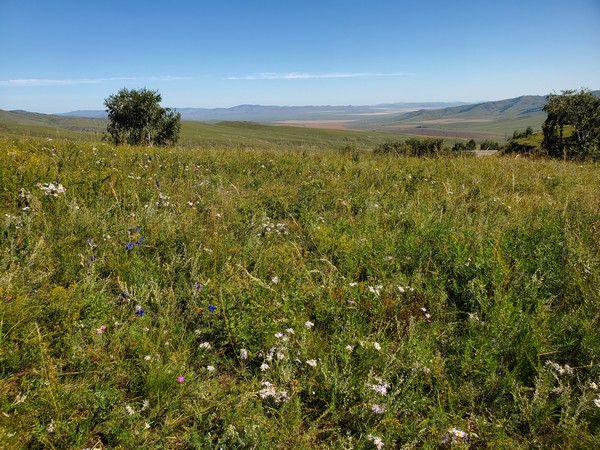
Along the way we stopped to admire rolling meadows of wildflowers, with grain fields in the distance. This area is Mongolia's breadbasket.
Founded in 1974 as a joint mining venture with Russia, Erdenet is very much a company town. This is the main square on a Tuesday morning.
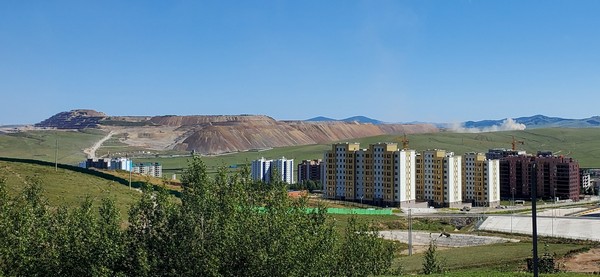
We visited the mining museum, and marveled at the open-pit mine looming over the town.
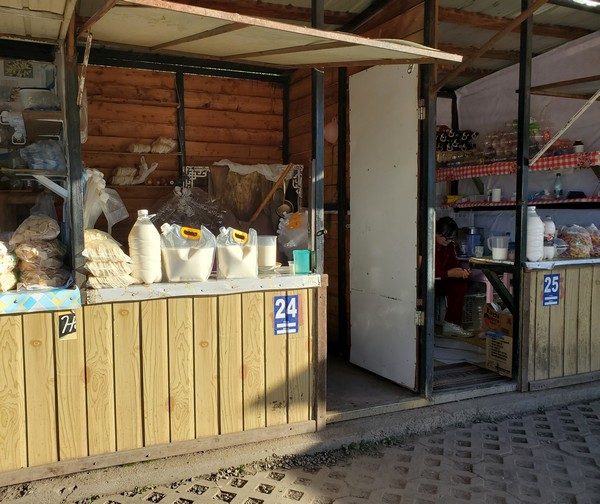
In the afternoon we stopped to sample airag, Mongolia's national beverage. I had thought that this fermented mare's milk would be like yogurt or khefir, but it had an alcohol taste and I did not like it.
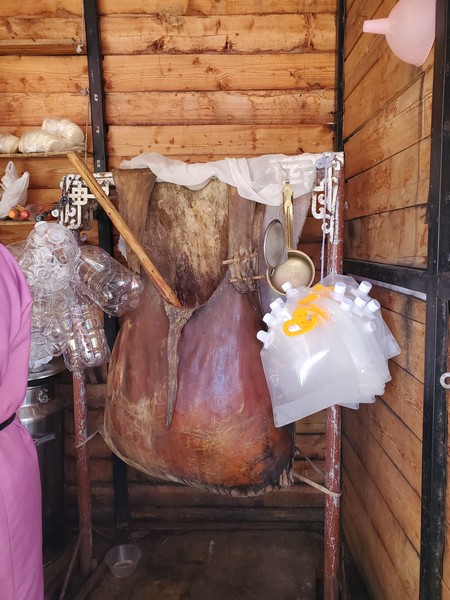
To make airag, the filtered mare's milk is poured into a cowhide sack along with some starter. Using a long wooden paddle with a flat blade, the mixture is churned frequently for one or two days. The result is tangy, fizzy, and mildly alcoholic (0.5% to 3%). It gets stronger with age.
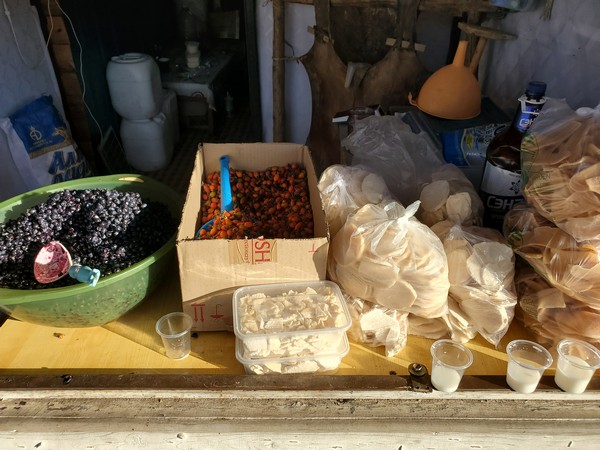
Wild blueberries, sea buckthorn berries, dried cheese, and airag samples at a roadside stand. Sea buckthorn juice is tart, refreshing, and nutricious. I didn't love the dried cheese.
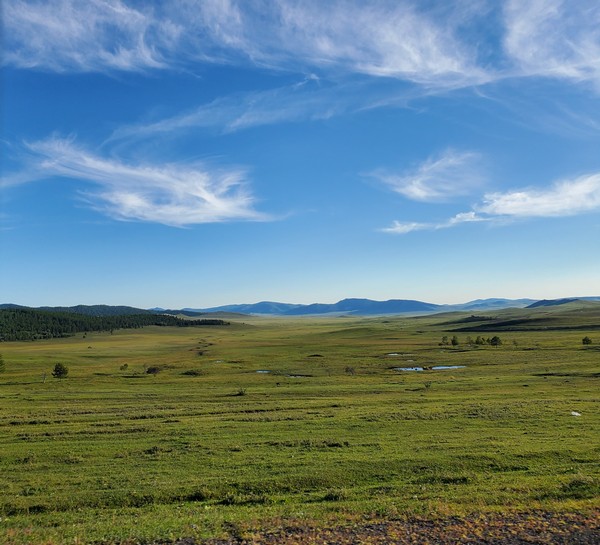
The scenery was vast and glorious. Mongolia is called the "Land of the Eternal Blue Sky" because it has over 250 sunny, clear days a year. The ancient nomads worshipped Tengri, the supreme sky deity and infinite spiritual force. Ancient leaders, including Genghis Khan, believed their power and right to rule came directly from the eternal blue heaven. I get it.
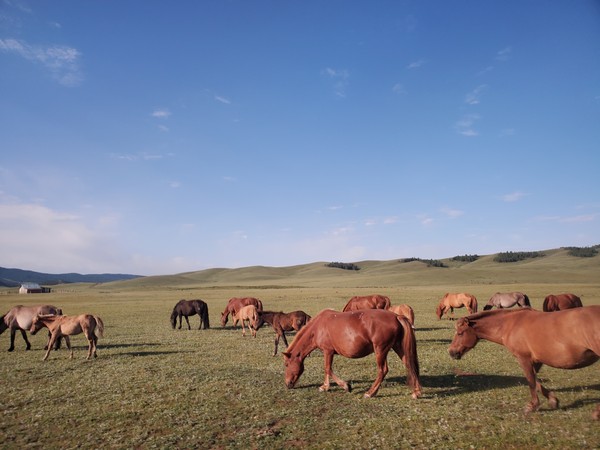
Horses roam free all summer. Sometimes the stallions have a GPS tracker to help their owners find them.
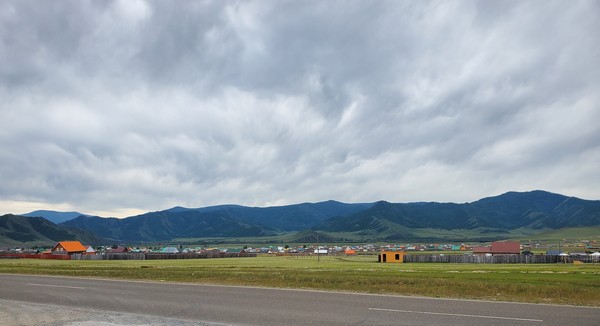
We'd occasionally pass a small town with colorful metal roofs. 25% of Mongolians live in small cities or towns like this, 50% live in the capital, and 25% are fully nomadic (down from 90% in the early 1900s).
Uran Togoo Volcano
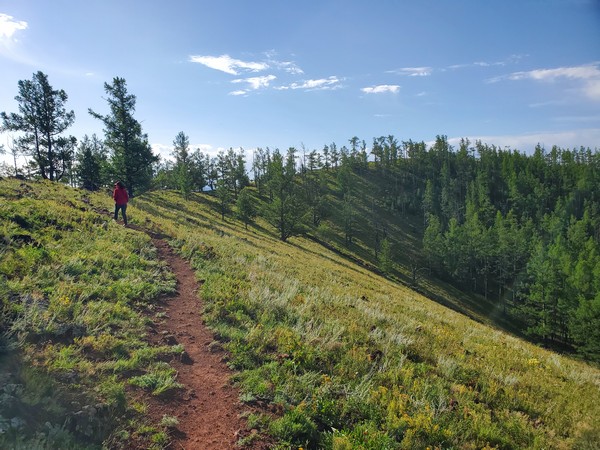
The next morning we hiked up a steep trail through lovely larch-aspen-birch forest to the rim of 5500-foot Uran Togoo, an extinct volcano, and walked around the crater rim.
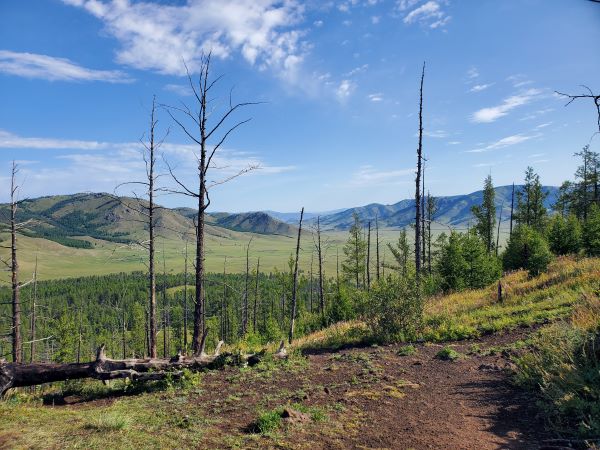
The views were breathtaking. Our previous night's camp is somewhere in the valley far below.
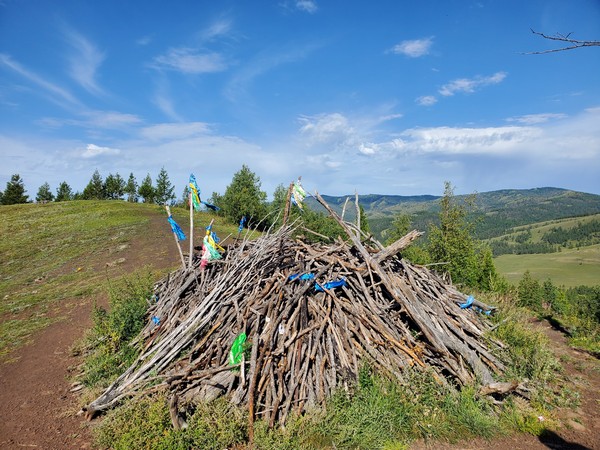
An ovoo (pronounced aWAH) is a sacred ceremonial mound made of rocks or sticks. They serve as altars, landmarks, and geographic markers throughout the grasslands and mountains. It's traditional to add a prayer cloth, stick, or rock to the pile.
First Nomad Family Visit
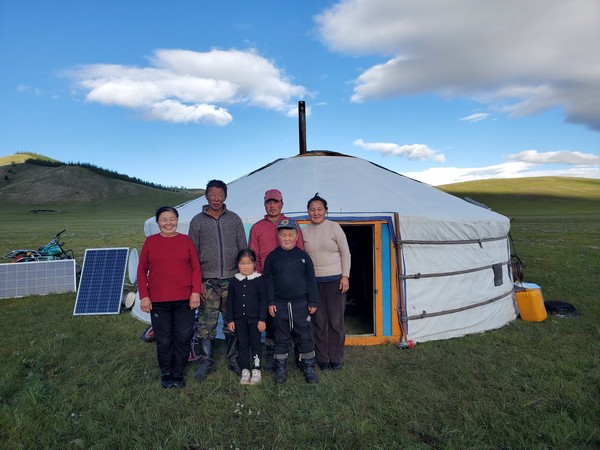
We spent two nights with nomad families, and it was the highlight of the trip. This is Otga (left) with her husband, son, daughter-in-law, and two grandkids.
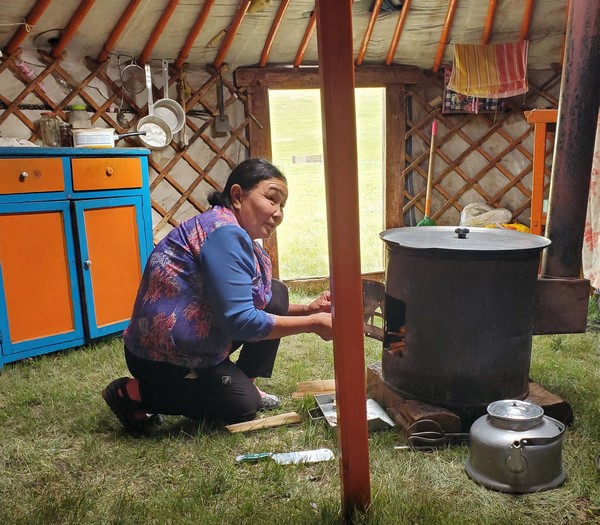
For the first visit we arrived unannounced, so we could experience the true hospitality of the herders! Otga instantly stoked the fire to boil water for green tea. We were not the first tour group they have hosted. We came bearing small gifts (toys for the kids, bags of dried fruits or nuts), the tour company gifted them rice and oil, and we presented a small tip when we left. So our arrival was not met with dismay!
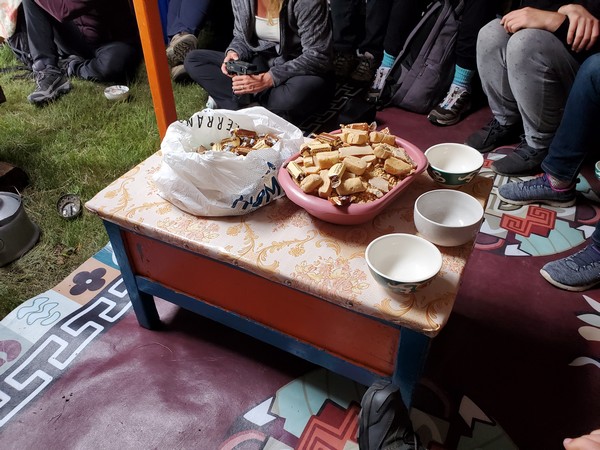
Otga served us dried cheese, dried bread (like breadsticks), chocolate wafers, and delicious rhubarb jam. Rhubarb grows wild here.
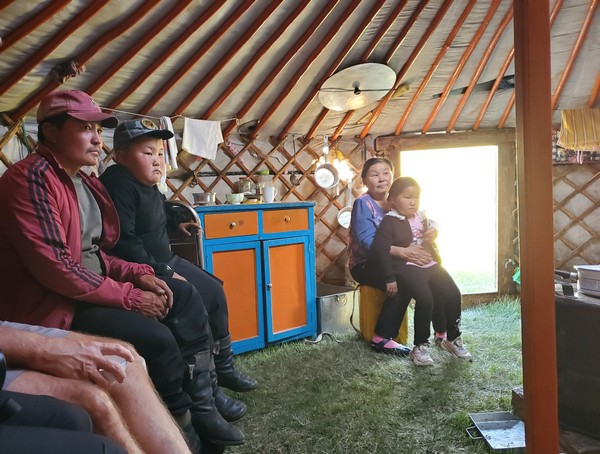
We sat and chatted with the family, who seemed happy to answer our many questions.
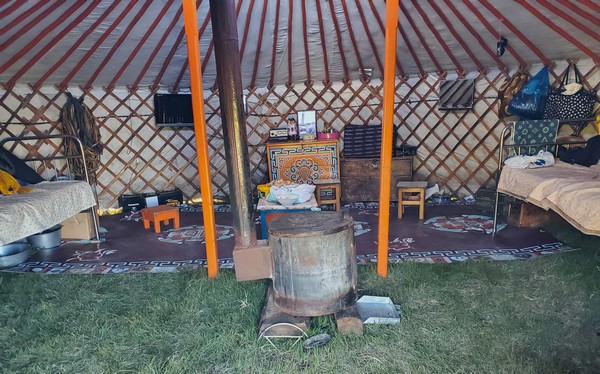
The two gers each had a small TV on the wall, powered by solar panels and a satellite dish. The family also had cell phones. They move closer to town in the winter so the kids can go to school. Mongolia has a 99% literacy rate.
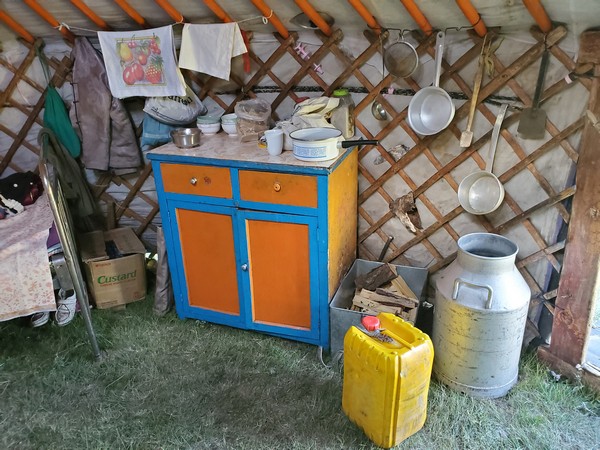
The kitchen. All cooking is done on the wood stove.
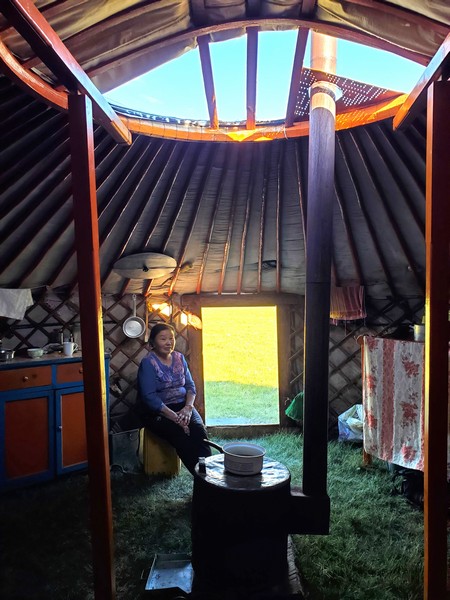
A ger is a miniature model of the universe. The circular wheel at the top symbolizes the sun, the roof poles radiating outward are the sun’s rays, and the support poles are the connection between earth and sky. The orange color represents sun, warmth, and fire, and brightens up the interior. The top can be closed to keep out rain and cold.
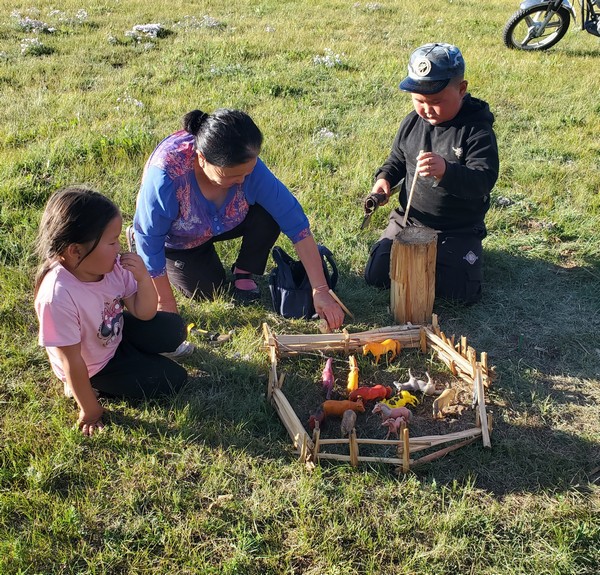
Eight-year-old Erden using a hatchet to split sticks to build a corral for his toy animals
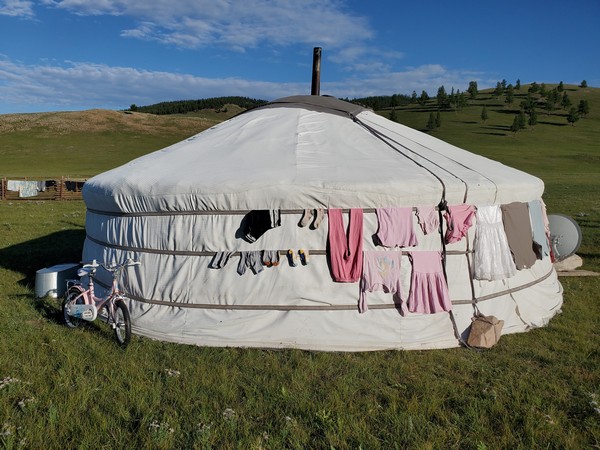
After hauling water from a nearby spring and handwashing the clothes, they are hung to dry.
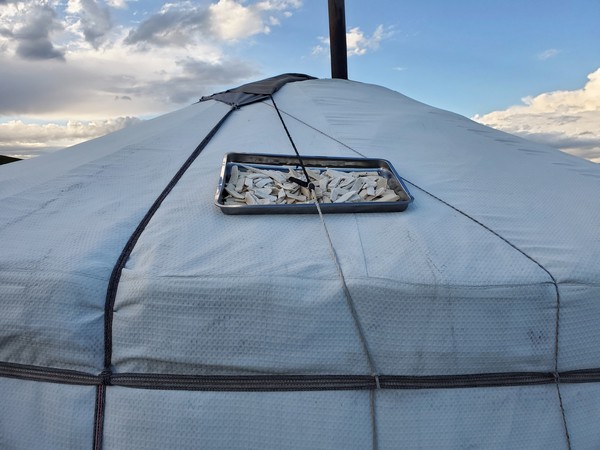
Cheese drying for winter food
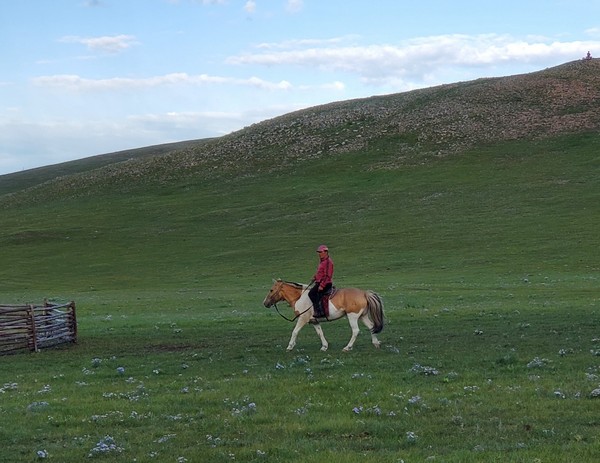
Mongolian horses are small and sturdy.
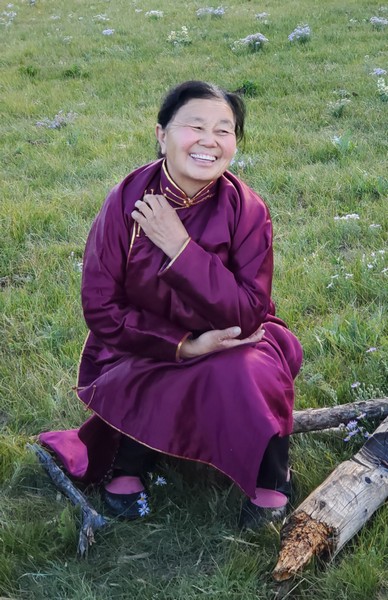
Otga seemed a happy-go-lucky person, always smiling. She's wearing a traditional Mongolian robe, called a deel (pronounced del).
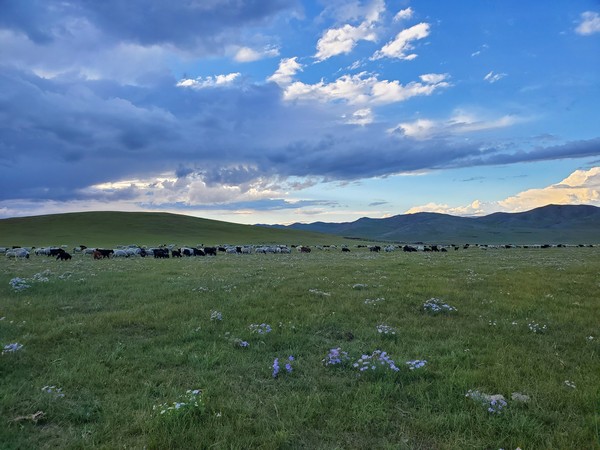
The family sheep grazing in a pasture filled with late-summer wildflowers.
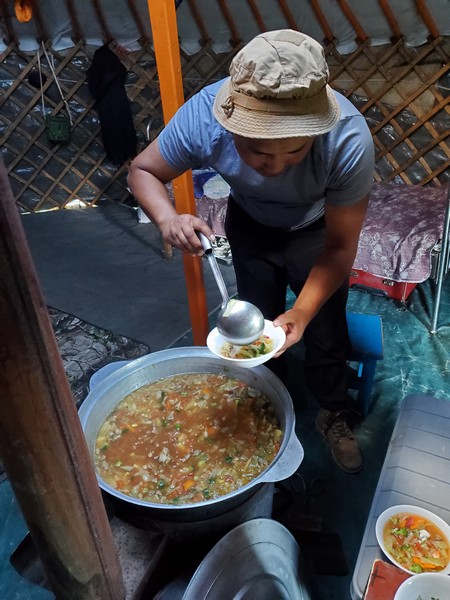
Our group brought our own food. The drivers made us a fabulous vegetable beef soup with bread.
Somehow the family magically separated the goats from the sheep and herded the goats into a corral.
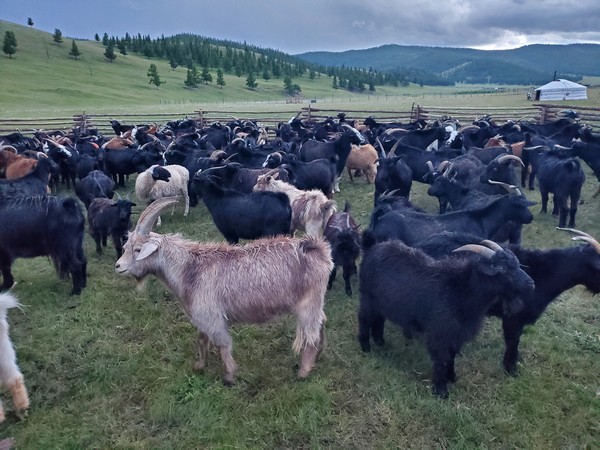
The goats are penned for the night so they don't eat the ger fabric. The sheep stay near the goats, who are the leaders of the mixed flock.
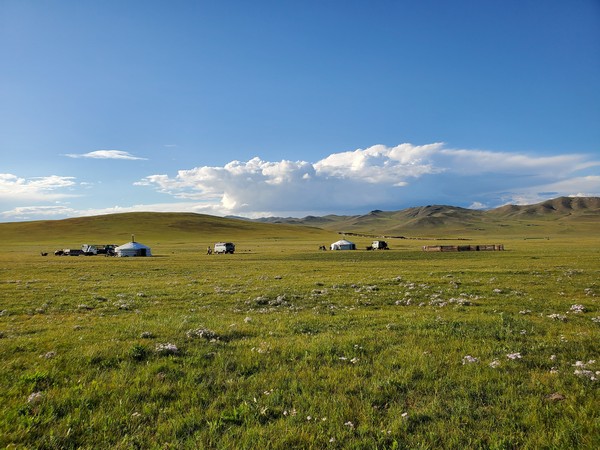
Otga and her husband live in one ger. Her son and his family live in another. They shared their gers with 12 of us! (We brought sleeping pads and bags; the drivers slept in the vans.)
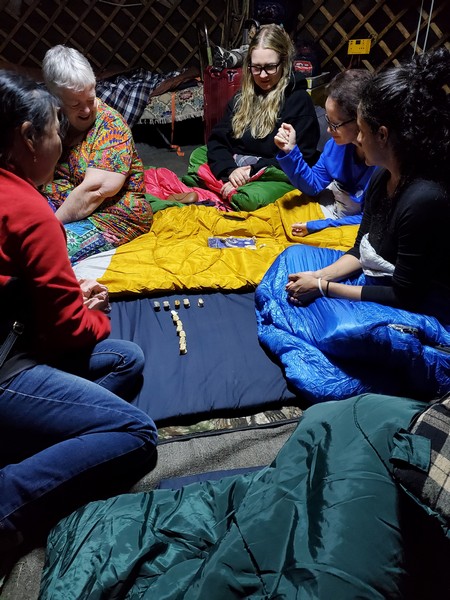
We learned how to play traditional Mongolian ankle bone games, using the cleaned and polished ankle bones of sheep or goats.
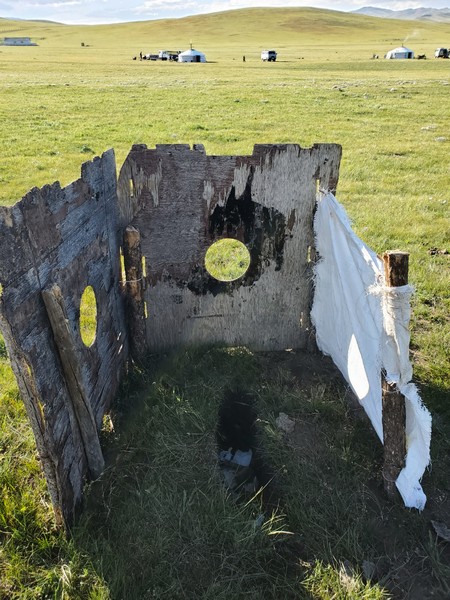
The outhouse
I studied Mongolian for three months before my trip. Here I am presenting our monetary donation and thanking our lovely host for the family's hospitality.
Murun
Murun, population 47,000, is the fifth largest city in Mongolia. We went snack shopping at a modern supermarket, and visited a local market and a museum.
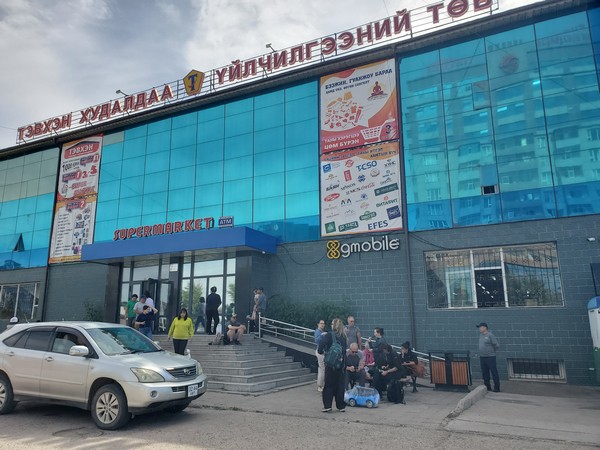
Supermarket in Murun
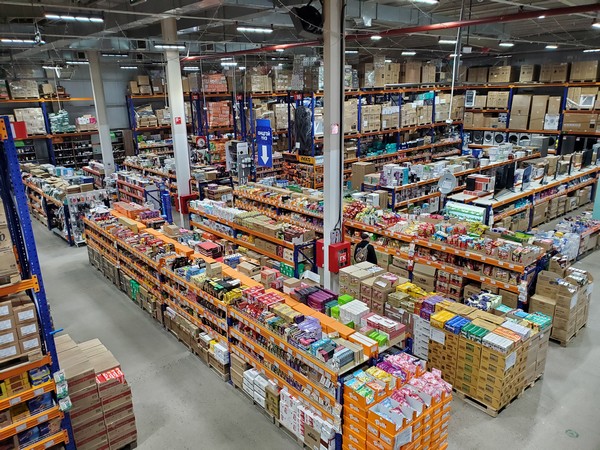
This supermarket sold pretty much everything, including food, appliances, and electronics.
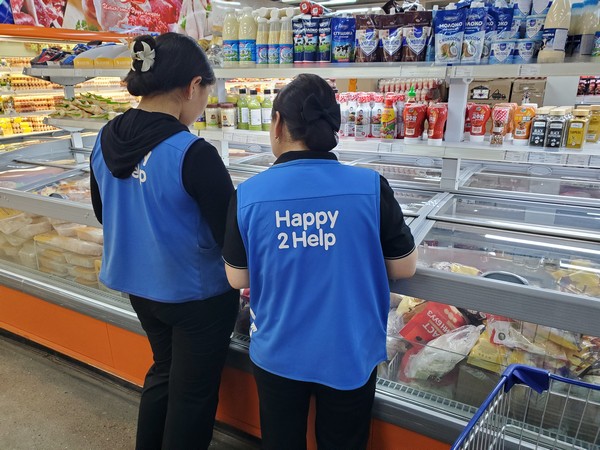
English is Mongolia's primary foreign language. Students begin learning it in third grade.
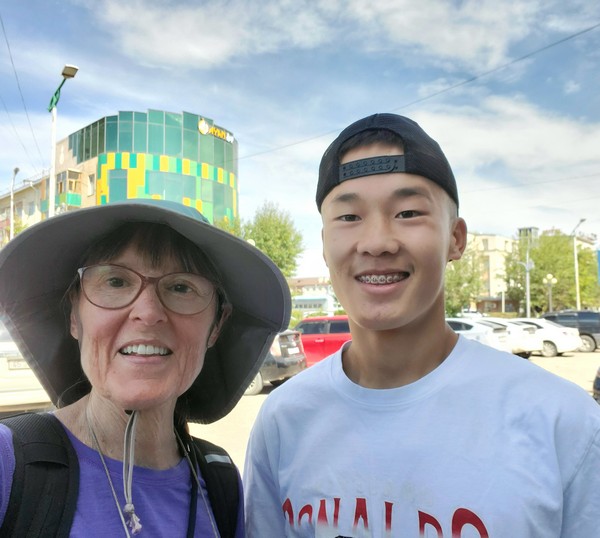
Bagbend is 16. His hobby is talking to tourists to improve his English. (That building behind me is not part of my hat!)
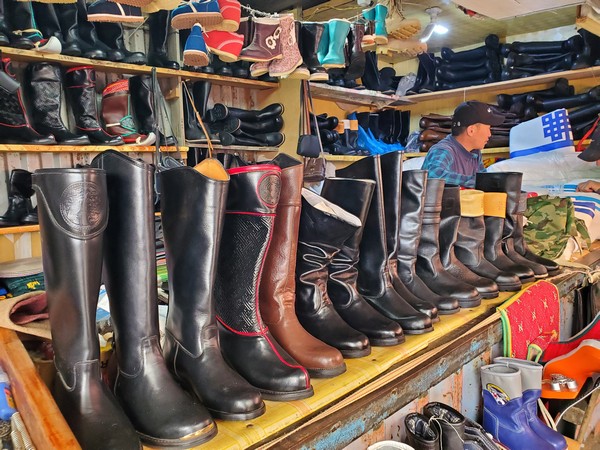
Leather boots for sale in the outdoor market
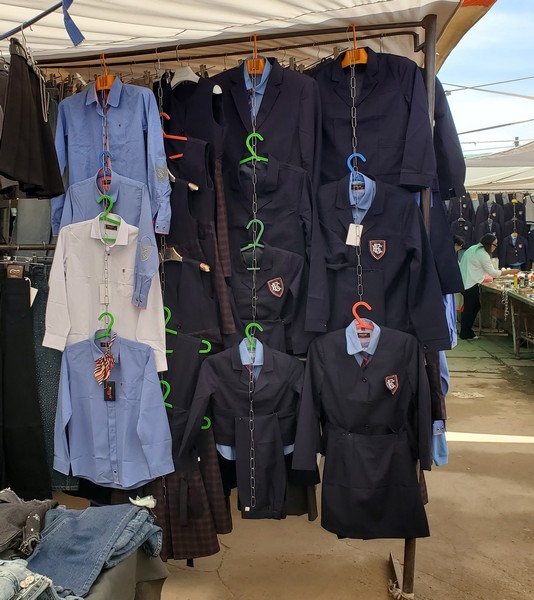
School was starting in a few days and uniform sales were brisk at the outdoor market. Uniforms are required at both public and private schools.
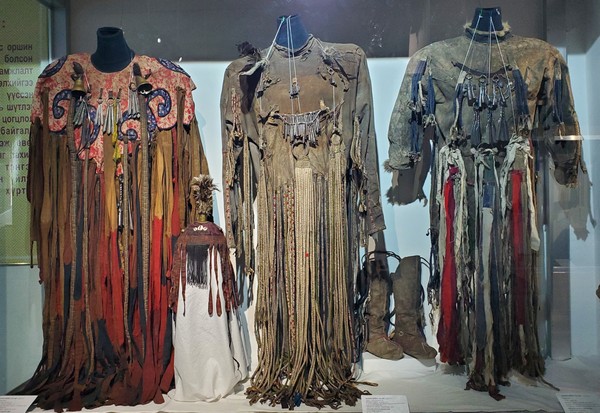
Shaman robes at the interesting ethnographic museum. They act as sacred armor that protects the shaman and channels ancestral spirits. Each element of the robe and headgear has significance. Shamans still serve as spiritual guardians and community healers, connecting ancestors, living people, and the environment.
Deer Stones
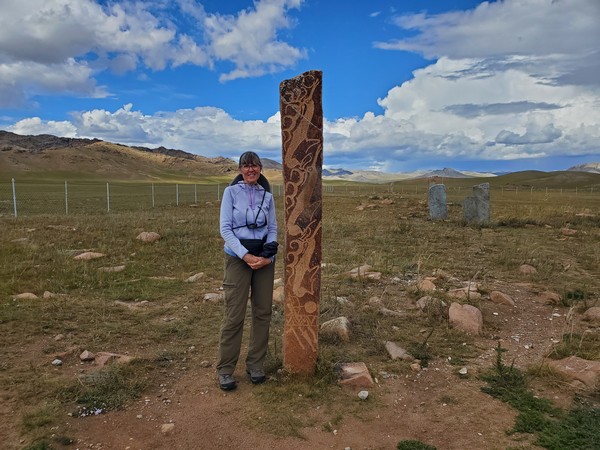
North of Murun we stopped to see the 14 standing stones at the Uushgiin Uvur archeological site. Each one is elaborately carved with deer leaping upward to carry the soul of the deceased person to the realm of the spirits. They were carved about 2500 to 4000 years ago. Most of the remaining 1500 or so are found in Mongolia.
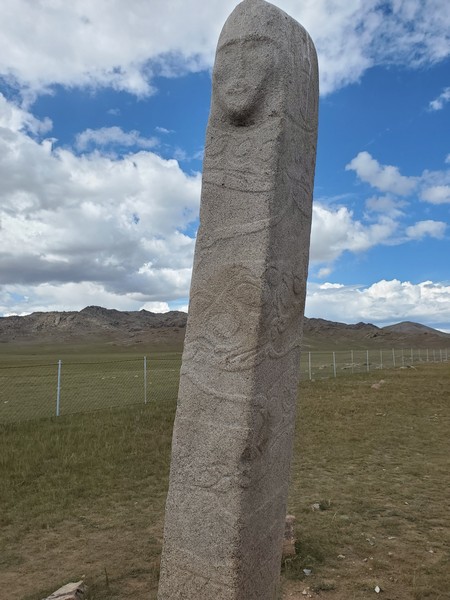
This one has a beautifully-carved human head.
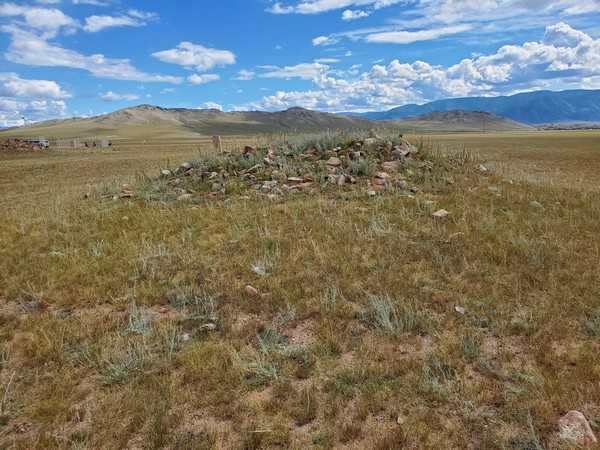
We saw dozens of burial mounds dotted throughout the countryside. Many date from the Bronze Age and consist of stone piles that mark underground burial chambers.
Khuvsgul Lake
Khuvsgul Lake is the largest freshwater lake in Mongolia by volume and one of only twenty ancient lakes in the world (more than 2 million years old). It's also the most significant drinking water reserve in Mongolia. It has high water clarity due to low levels of nutrients. It sits in a National Park larger than Yellowstone, in a transition zone between Central Asian Steppe and Siberian Taiga.
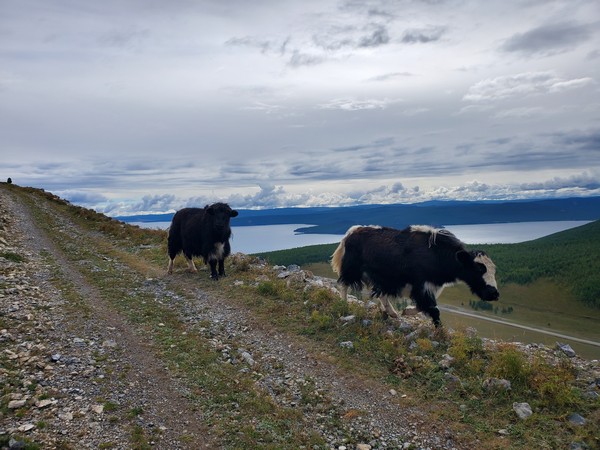
We hiked to the top of Jankhai Peak for beautiful views of the lake. Yaks replaced cows as we traveled farther north; they withstand the cold winters better than cows and their milk has a higher fat content. I tried yak yogurt and yak butter and both were delicious, with no yakky smell or taste.
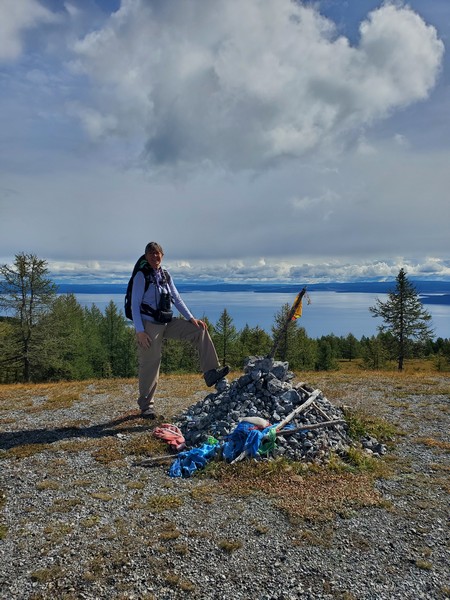
Russia is about 80 miles away, at the north end of this 85-mile-long lake.
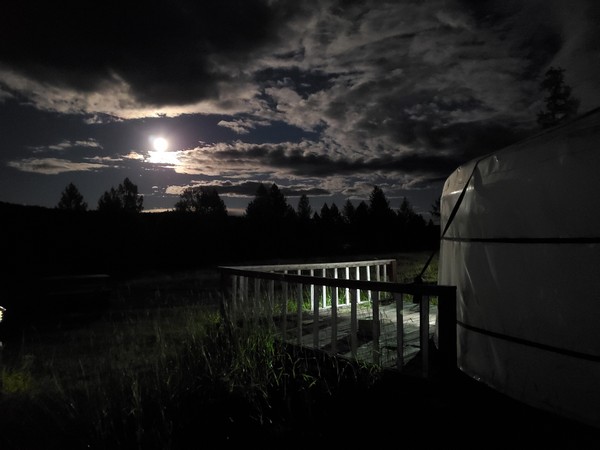
A full moon over our camp by the lake
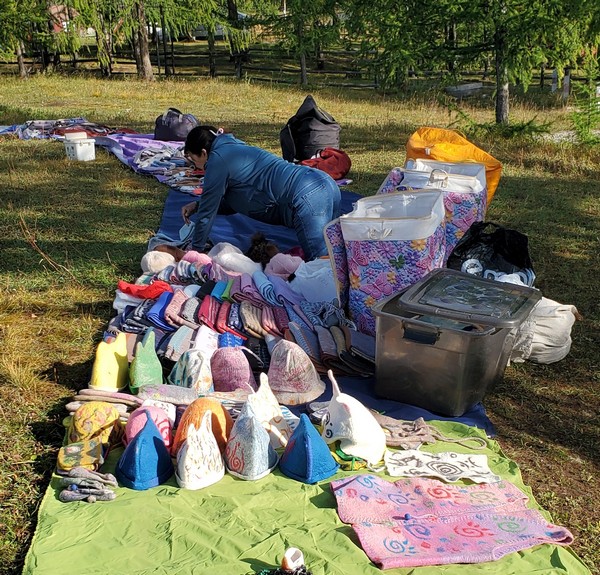
Mongolia is known for cashmere (made from goat wool). Vendors set up near our camp in the morning to sell socks, hats, scarves, and other items made from cashmere, yak, and camel wool.
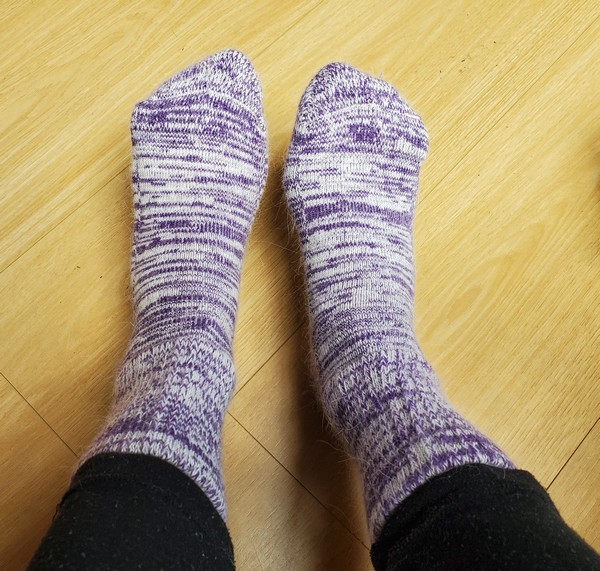
I bought a pair of yak wool socks. They're warm and soft and are supposed to be great for hiking.
Second Nomad Family Visit
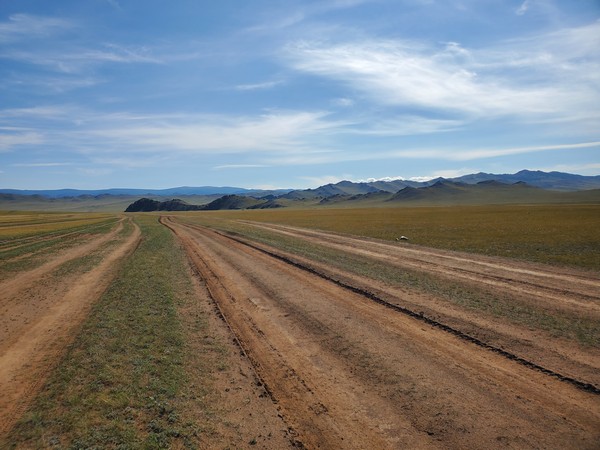
Mongolia has few paved roads. Most of the time we drove on dirt tracks. Some were fairly smooth, like these ones, and some were not (as you will see farther along in this narrative). Rainstorms turn dry, dusty tracks into deep, slippery mud, and drivers have to forge new paths, creating a network of scars across the steppe. Swollen creeks and riverbeds can cut off routes entirely.
Prius cars are extremely popular in Mongolia because they can go almost anywhere, get good gas mileage, and are very reliable.
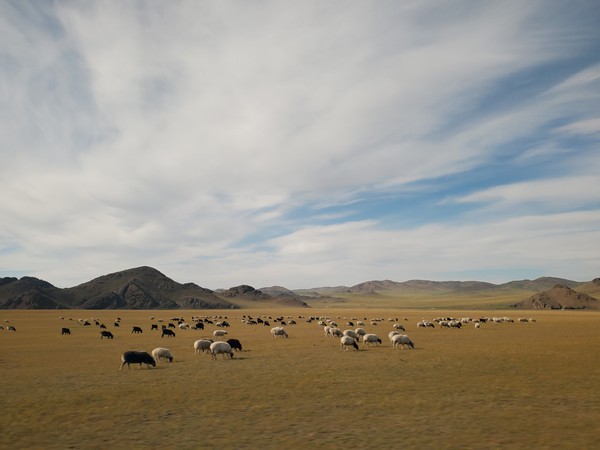
Oh the views! Grassland stretching as far as the eye can see, dotted with grazing animals.
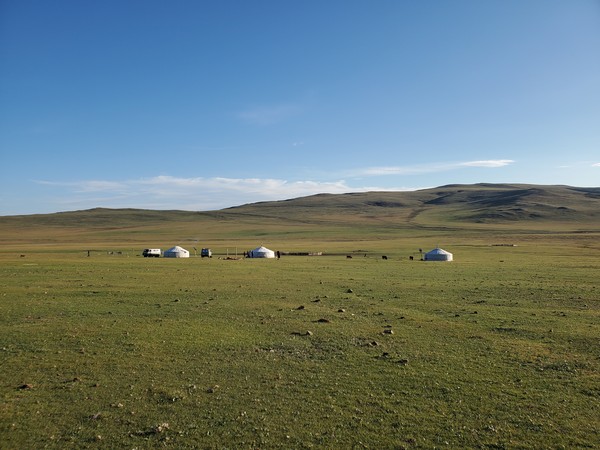
Approaching the camp for our second family home stay
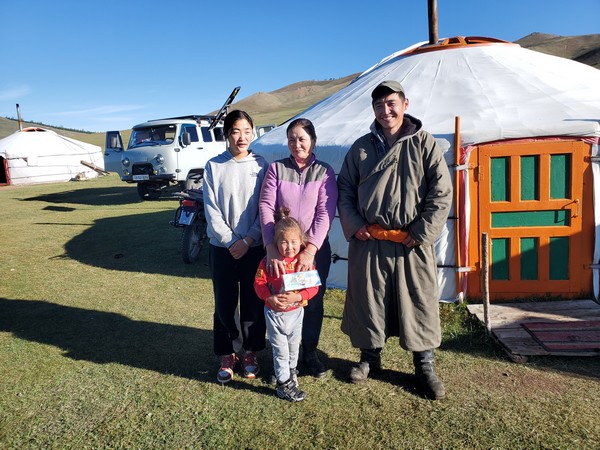
Tonga (center) is a widow. Here she is with her daughter, eldest son, and grandson.
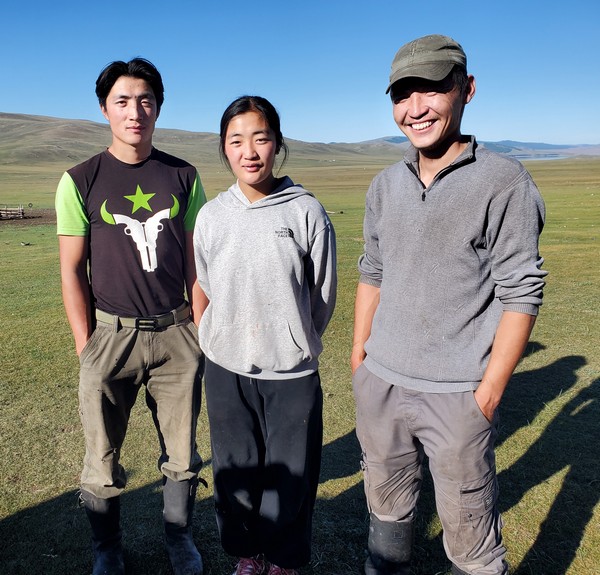
Tonga's children. Her eldest is a veterinarian. He was director of a regional vet program, living in a town, but came back to help his mom when his father died. His wife did not like the nomadic life, and left him soon after their son was born. Apparently many younger women are unwilling to sign up for the hard life of a nomad, and Tonga's handsome youngest son, age 23, has limited prospects for a girlfriend.
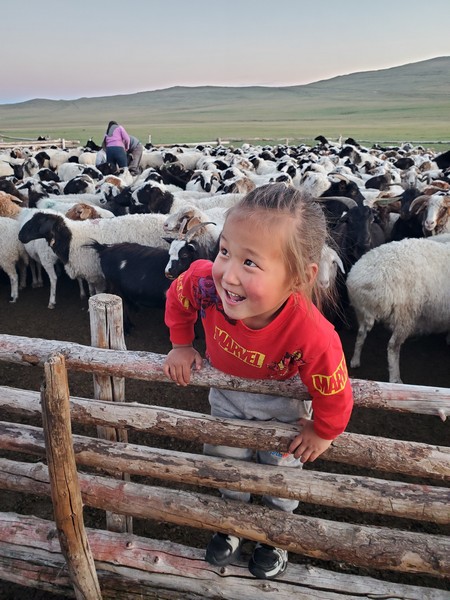
Adorable Otma will turn four in September and the family will host a big celebration for his first haircut.
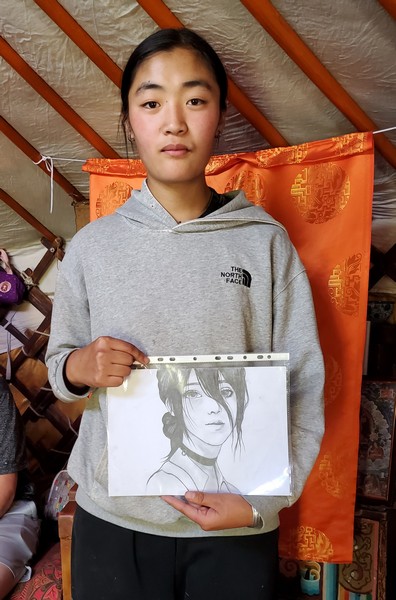
17-year-old Oyenga is a phenomenal artist. She hopes to go to design school.
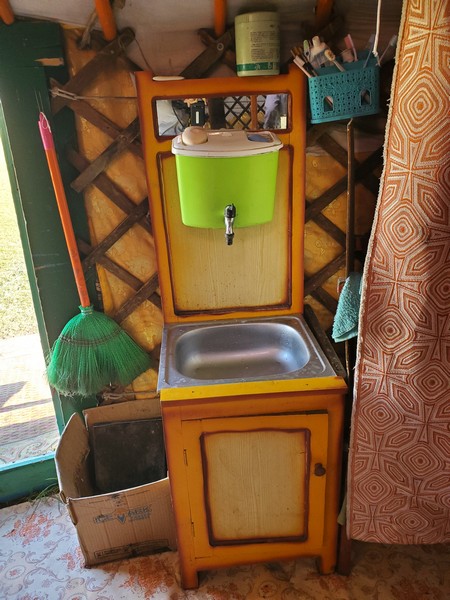
In the absence of running water, this is a clever sink: pour water in the top reservoir and catch it in a bucket below the sink.
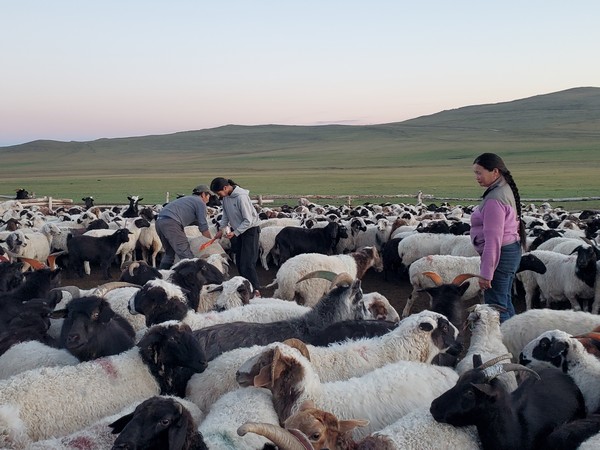
Touching up the orange paint marking their sheep
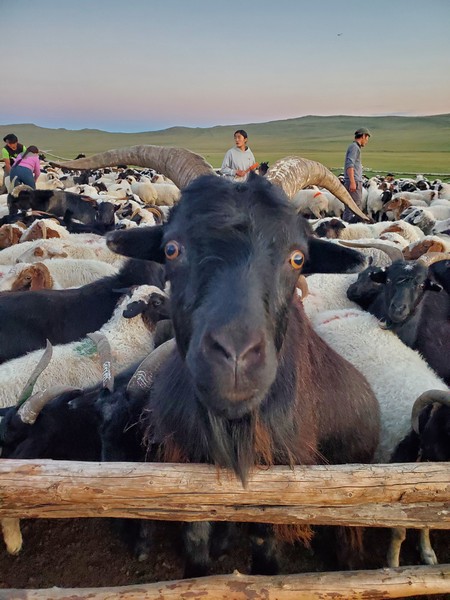
Goats are curious and intelligent.
Mongolian BBQ
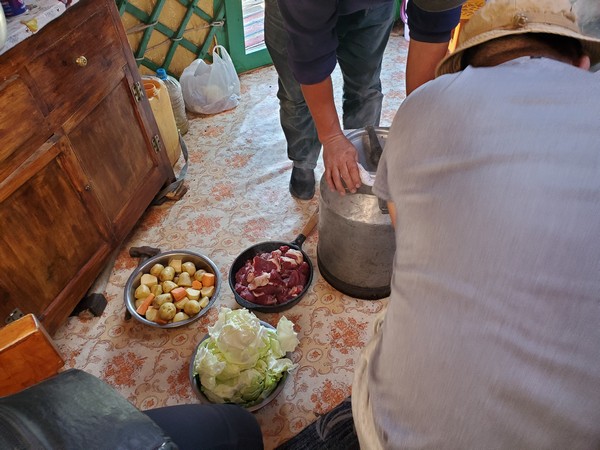
The guides made us traditional Mongolian BBQ for dinner. Here mutton, potatoes, carrots, and cabbage are ready to go into the pot.
Red hot rocks are placed on top of the meat to speed up cooking and prevent scorching on the bottom before the meat is cooked on top.
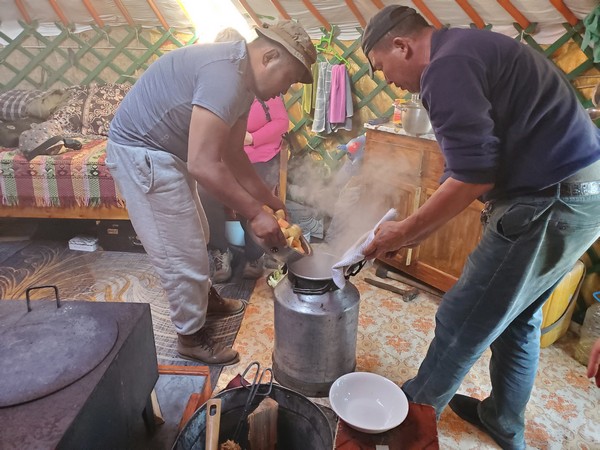
Add the vegetables.
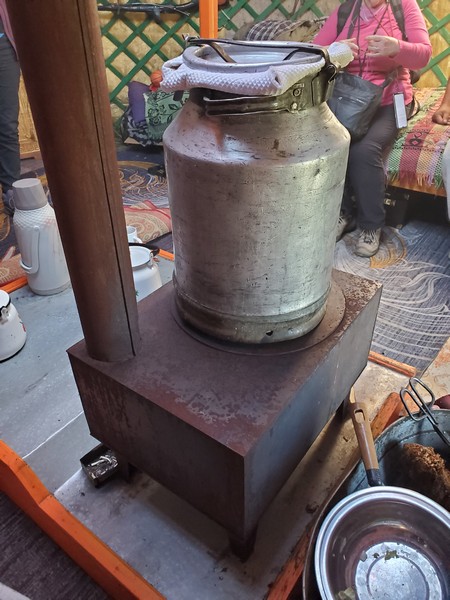
Cover tightly and set on the stovetop for an hour or so. The result is kind of like tough pot roast.
Mongolians love to sing! After dinner we sat in one of the gers and took turns singing songs. Jagga, one of our drivers, has a fabulous voice!
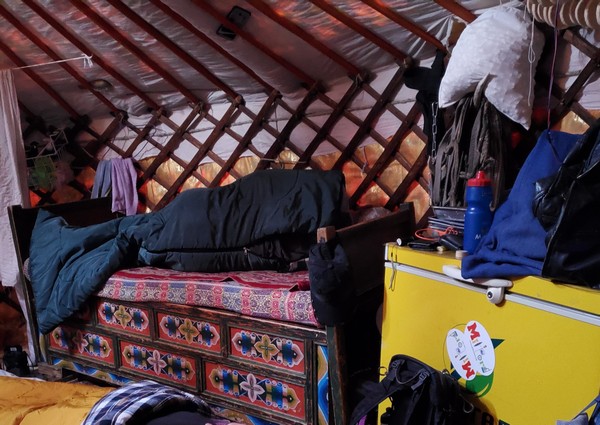
The family piled into one ger and we spread our pads and bags in the other two, some on brightly-painted beds and the rest on the ground. Note the small freezer, powered by a solar-charged battery.
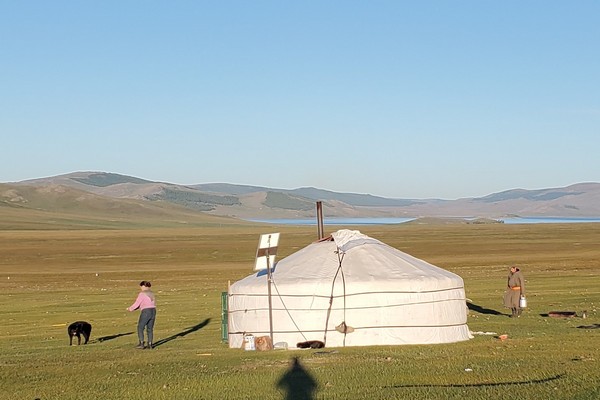
The eldest son carrying heavy water jugs from a nearby spring in the morning.
Tonga milking one of their cows in the morning
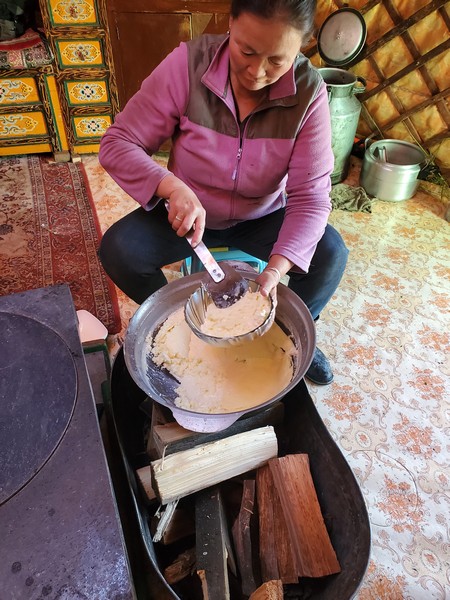
Tonga had made rice pudding the night before. It was delicious!
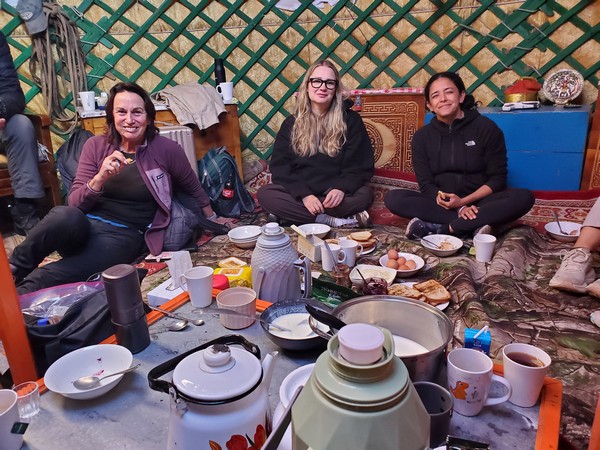
The drivers served us hard-boiled eggs, yogurt, muesli, toast, and fry bread for breakfast.
Terkhiin Tsagaan Lake
After saying goodbye to our amazing hosts we headed south to Terkhiin Tsagaan Lake.
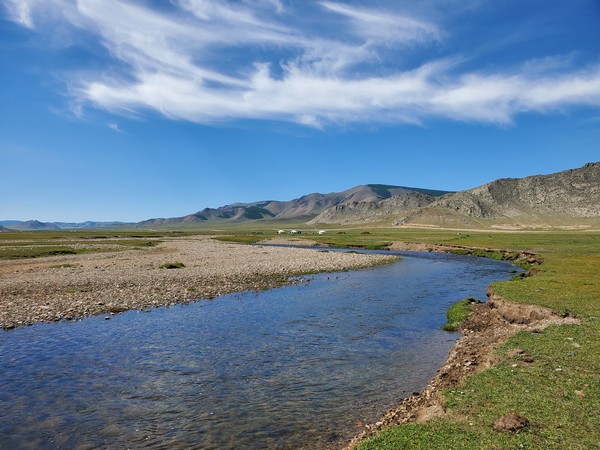
We stopped for a picnic lunch along this river.
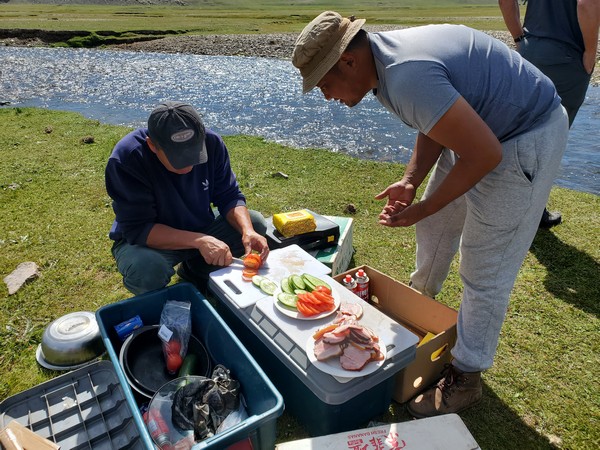
The drivers preparing our lunch of vegetables, noodles, ham, and bread.
We often crossed paths with herds of goats, sheeps, cows, yaks, or horses. Our driver played an eclectic mix of Mongolian and English-language music.
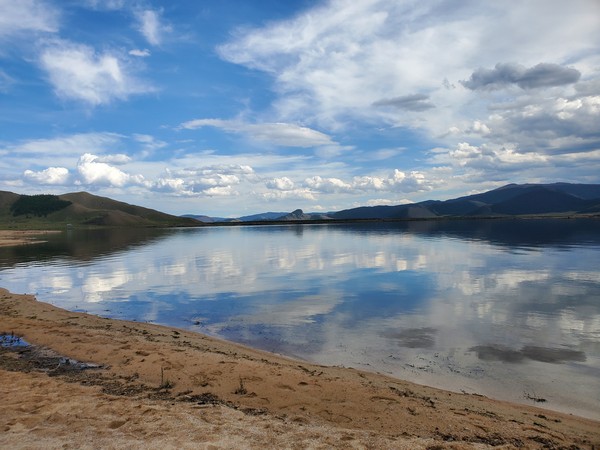
After a long day on bumpy roads we arrived at our camp next to beautiful Terkhiin Tsagaan Lake.
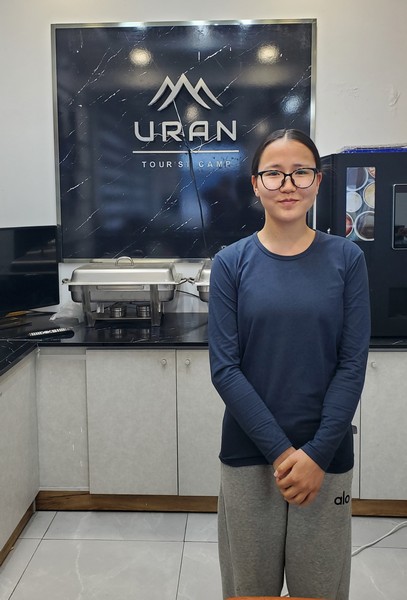
16-year-old Orunzeya speaks fluent English, is learning Korean, sings, draws, writes poetry, and helps her mom run the family tourist camp business in the summer.
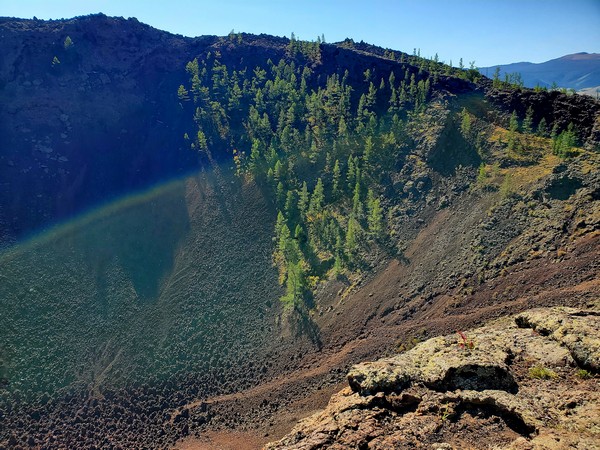
The next morning we hiked up to the rim of Khorgo volcano. (We started at about 6800 feet and the rim is at 7400 feet.)
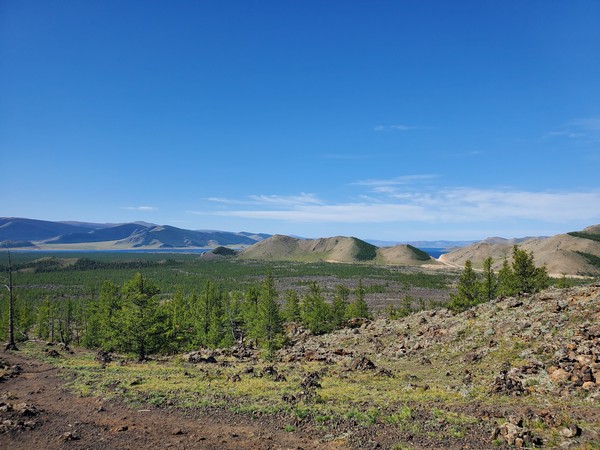
Lava field, larch trees, and the lake in the distance. This area is part of a large national park.
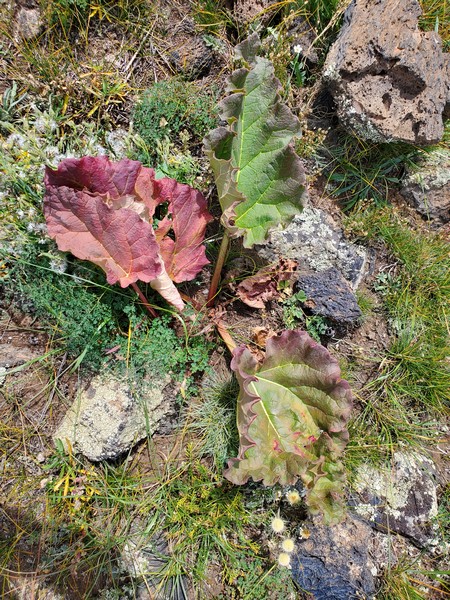
Wild rhubarb turning fall colors
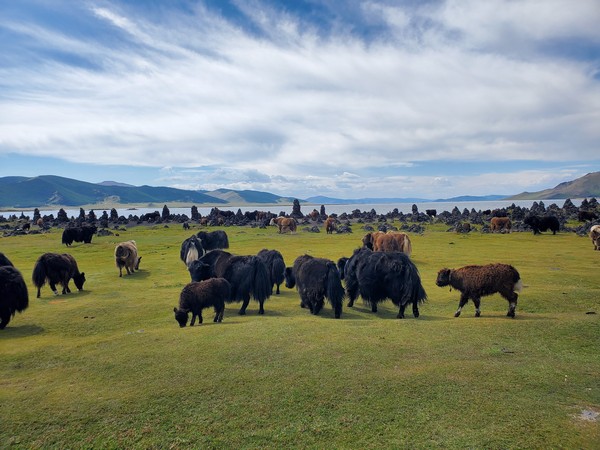
Yaks graze among cairns of stacked volcanic stones along the shore of the lake.
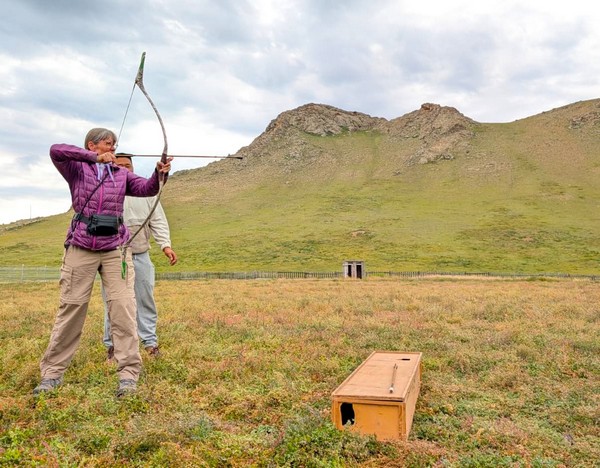
Back at camp, we tried our hand at traditional Mongolian archery.
Tsetserleg
The next morning we headed for Tsetserleg to visit an ancient monastery.
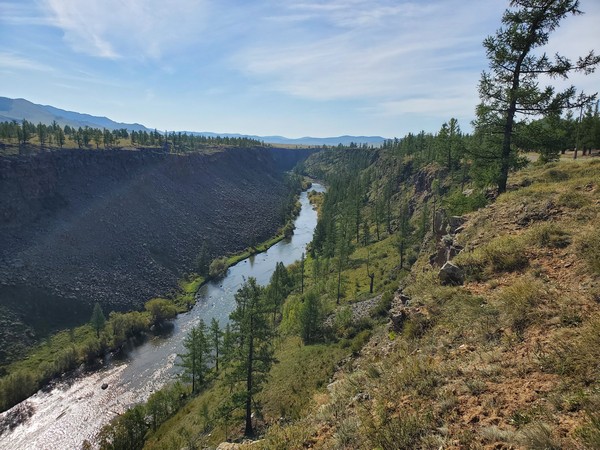
Along the way we stopped at the Chuluut River Canyon, a gorge carved through ancient volcanic lava flows.
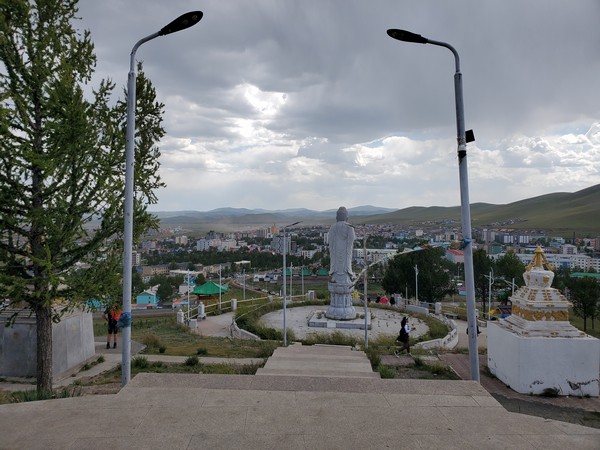
The small city of Tsetserleg (population 16k) lies on the northeastern slopes of the Khangai Mountains.
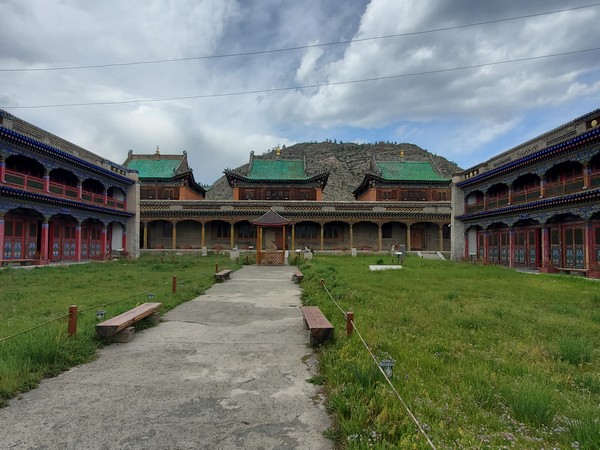
The Zayan Gegeen Monastery is an ancient monastic site established in the mid-1600s that grew into a massive religious and academic center housing over 1000 monks. Severely damaged during communist purges in the 1930s, the surviving structures were eventually restored and now operate as an ethnographic and local history museum.
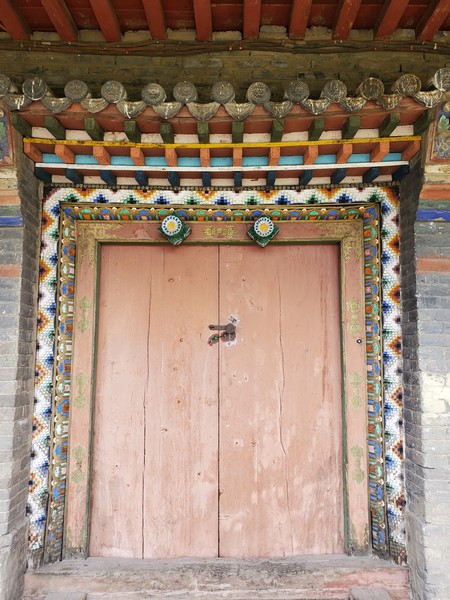
The buildings blend Tibetan, Chinese, and traditional Mongolian design using wood, stone, blue bricks, and decorative tiles.
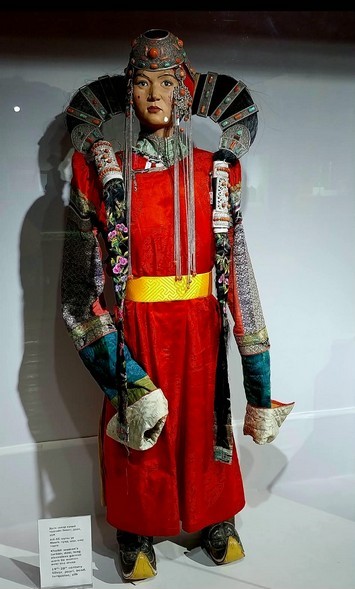
Traditional noblewoman's attire prior to Russian control in 1921
It was the first day of school and the students were being welcomed with a celebration. After speeches and music performances, each class paraded into the school carrying a sign with their class number. Proud parents watched nearby.
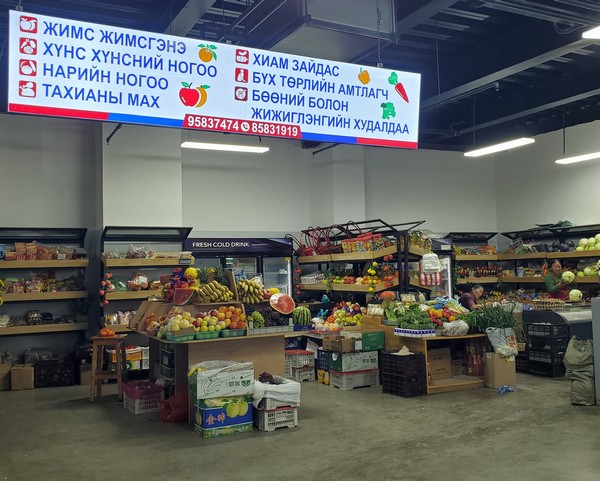
Produce for sale at the indoor market
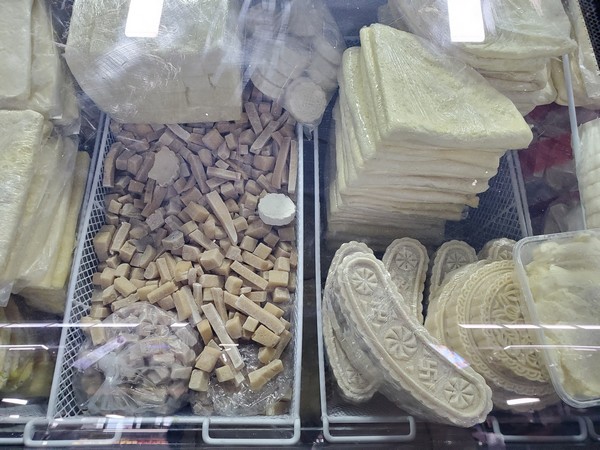
Cheese curds for sale in the market. Commercial brands use unique stamps to differentiate their products.
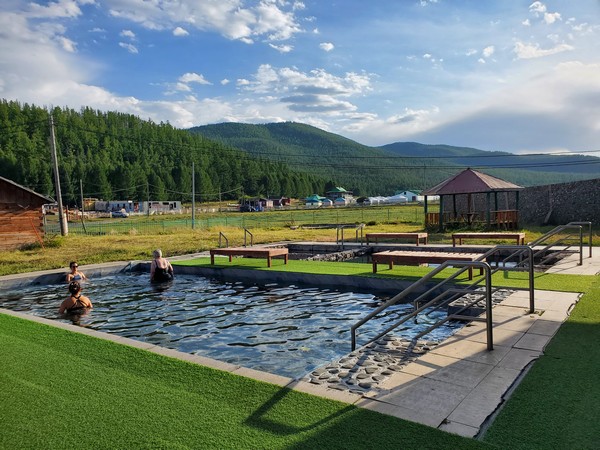
Our day ended at Tsenkher Hot Springs. The sulfur springs flow out of the ground at over 180 degrees and are cooled to around 104 degrees for soaking. Bliss!
Karakorum
The next day we took a bumpy road to Karakorum, the 13th-century capital of the Mongol Empire, and a crossroads connecting Silk Road trade routes.
Here is one example of a bumpy section of road with a beautiful herd of horses.
You can imagine how easily these roads could become impassible in wet weather!
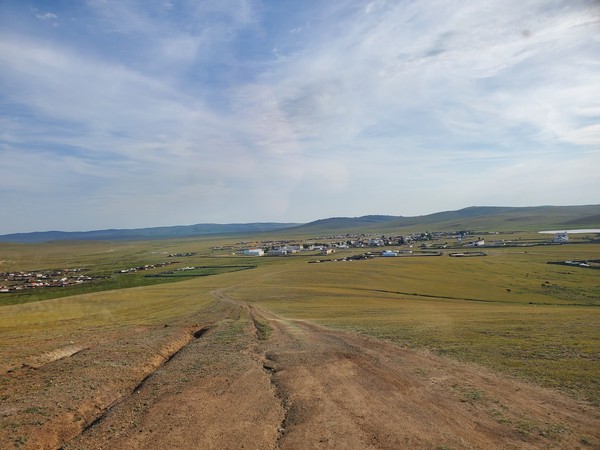
Our drives each day felt quite remote and adventurous!
Erdene Zuu Monastery
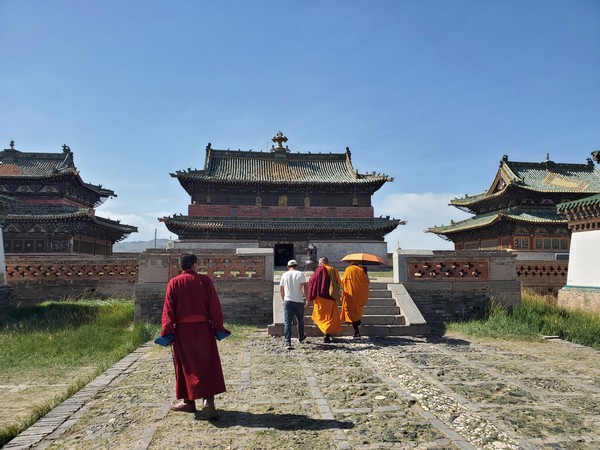
Erdene Zuu was the first Buddhist center of Mongolia. Much of the monastery was destroyed (and the monks executed) during Russian purges in the 1930s. The temples that remain are stunning.
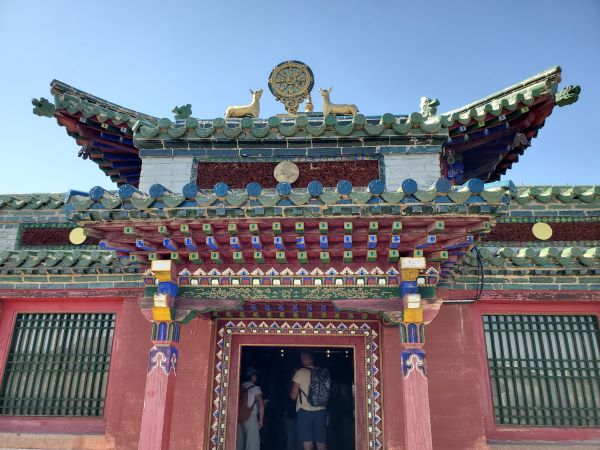
Detail of central temple, built in the 1580s.
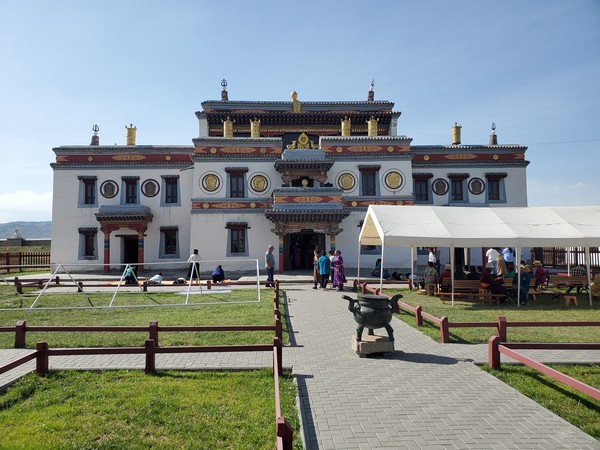
The Lavrin temple serves as the main active, functioning temple where monks hold daily religious ceremonies.
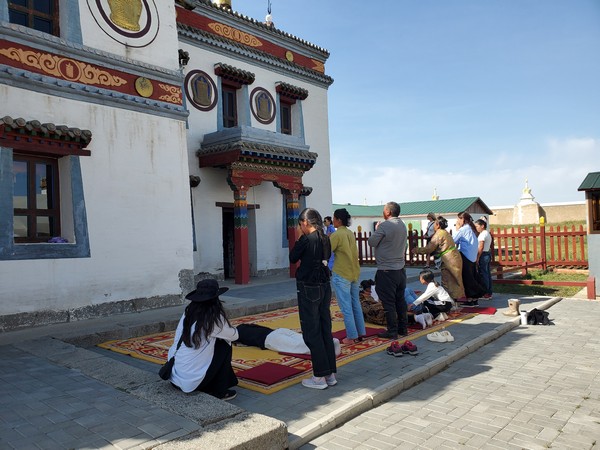
Many Mongolians had come to pray during a 100 Million MANI Retreat, to bring peace and harmony to all.
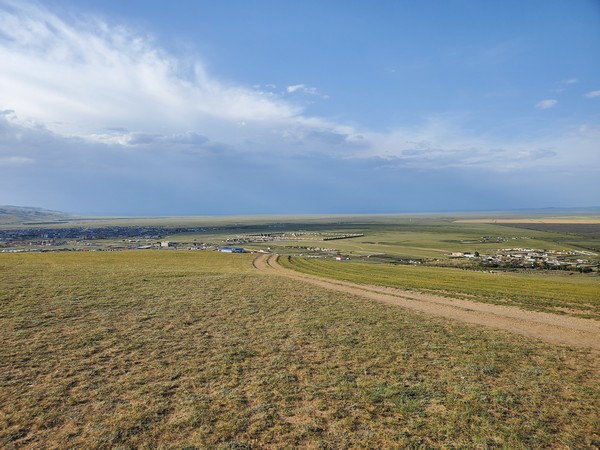
The Orkhon Valley Cultural Landscape is a UNESCO World Heritage site centered around Karakorum, recognizing more than two millennia of nomadic pastoral traditions. Erdene Zuu is visible as a walled rectangle in the center.
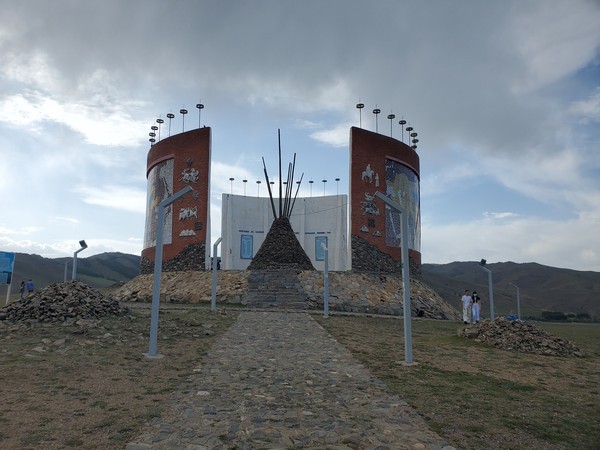
The Imperial Map Monument on a hill above Karakorum commemorates the three empires that settled in the Orkhon Valley from the 3rd century BCE to the 14th century CE. The monument consists of a large ovoo and three mosaic maps, one for each of the empires.
Mini Gobi
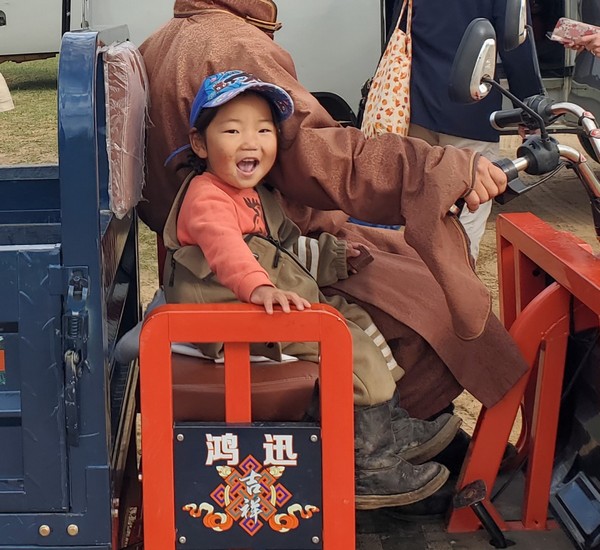
Late in the day we drove a short distance to our camp. This friendly little cutie was helping his dad drive the camp luggage cart.
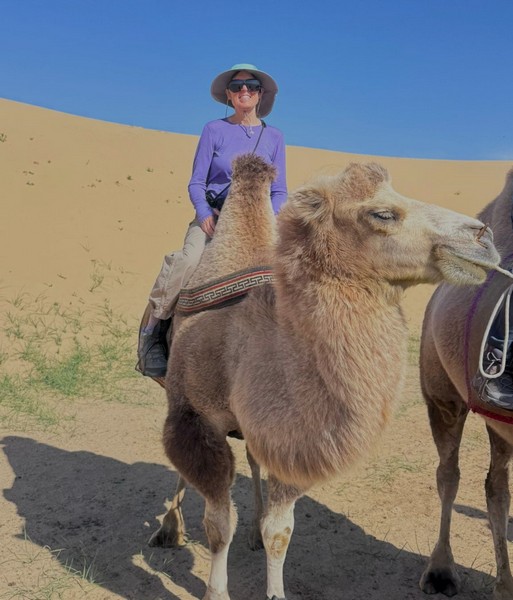
Khogno Khan National Park, aka the "mini Gobi," is a transition zone north of the actual Gobi Desert, with sand dunes where we rode two-humped (bactrian) camels. It was great fun, though not very comfortable! I named my camel Lurch, for the way it walked.
Hang onto the hump!
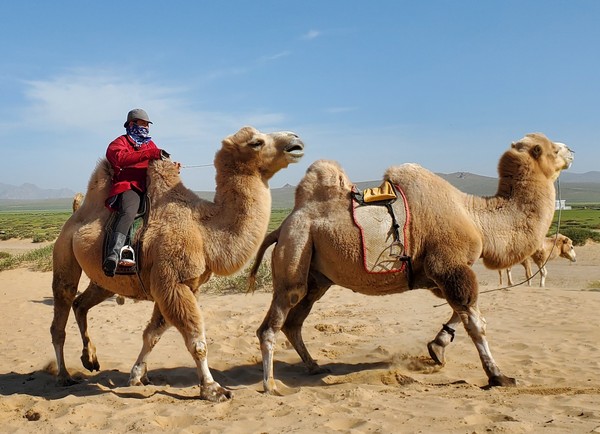
The owner of the camels we rode
Uvgun Monastery
Nearby are the ruins of a monastery complex hidden in a remote valley. Most of it was destroyed during the purges in the 1930s.
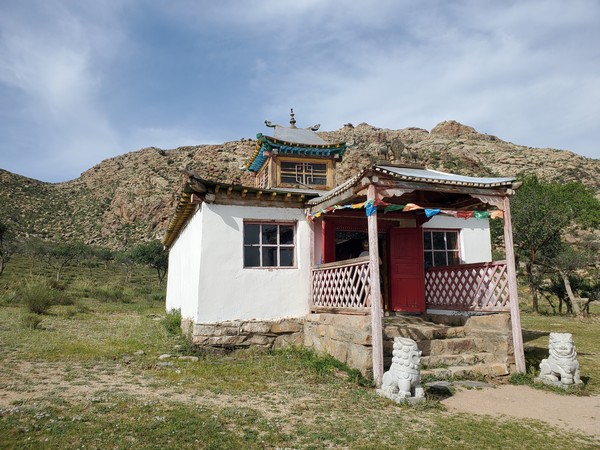
After Mongolian independence in 1990, several of the lower, smaller temples, such as this one, were restored.
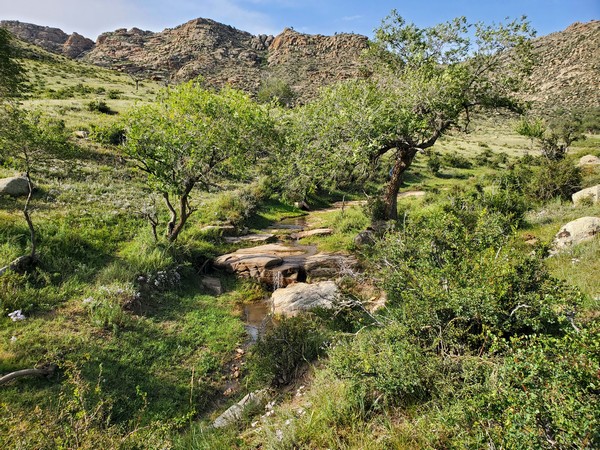
We climbed up to the ruins of the main monastery on a rocky trail next to a burbling stream.
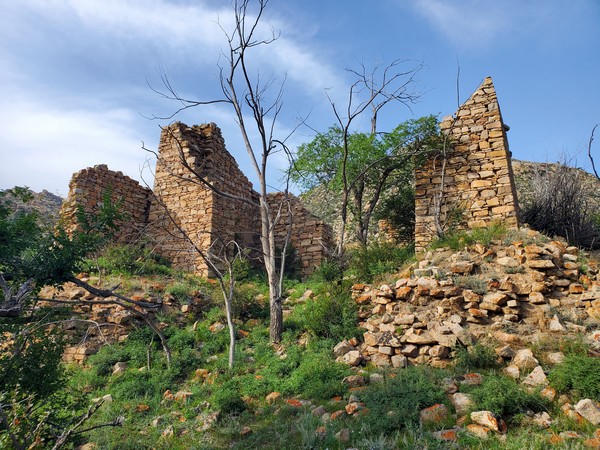
Built in 1700, there were once 64 sturdy stone rooms housing 200 monks. The ghosts of the past felt very strong here.
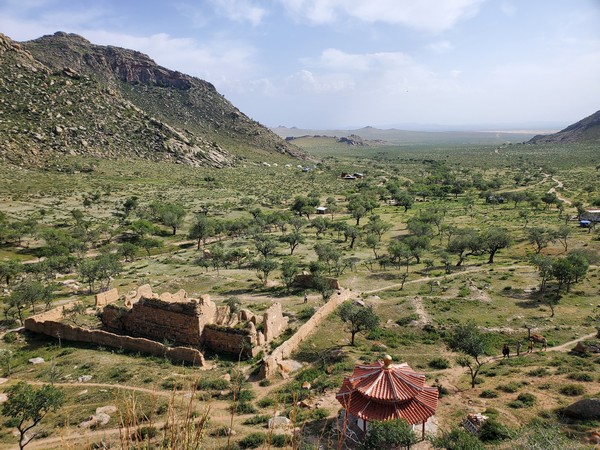
View looking down the valley
Hustai National Park
Mongolian wild horses (aka Przewalski's horse or takhi) have been successfully reintroduced to Hustai National Park.
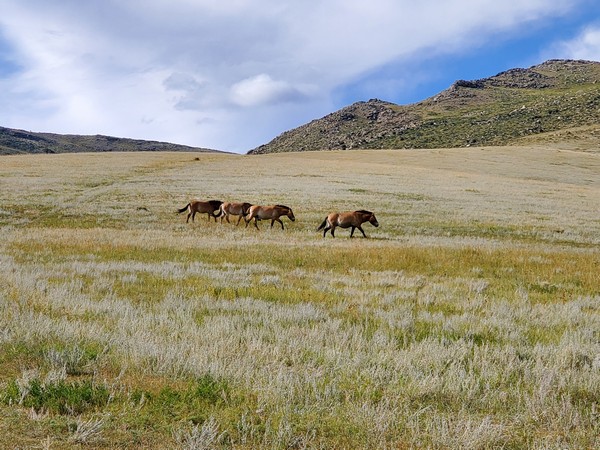
Four male takhi strolled right past us, an incredibly lucky up-close sighting.
A bachelor group of wild Mongolian horses
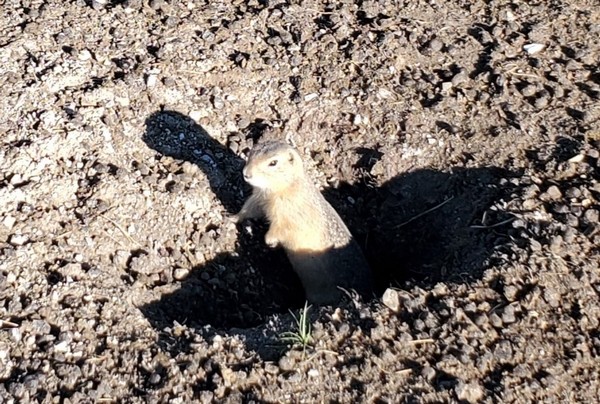
We also saw red deer (the size of elk) and many beautiful birds, but I was not able to get good photos (too busy looking through my binoculars!). Mongolia's equivalent to the North American prairie dog is the ground squirrel, and they are everywhere. They're 8 to 10 inches long and very cute!
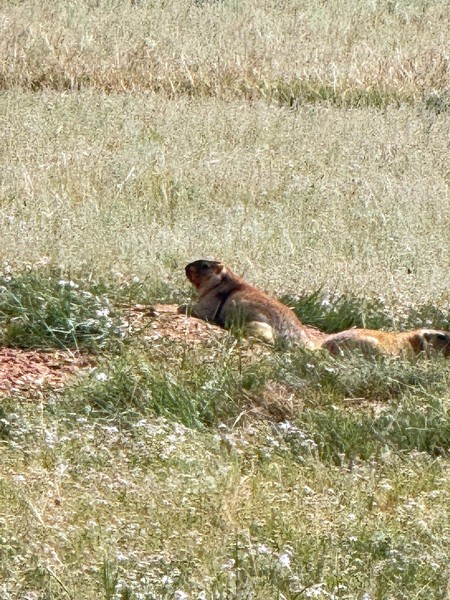
The marmots were so fat they could barely move. These are Mongolian (Tarbagan) marmots.
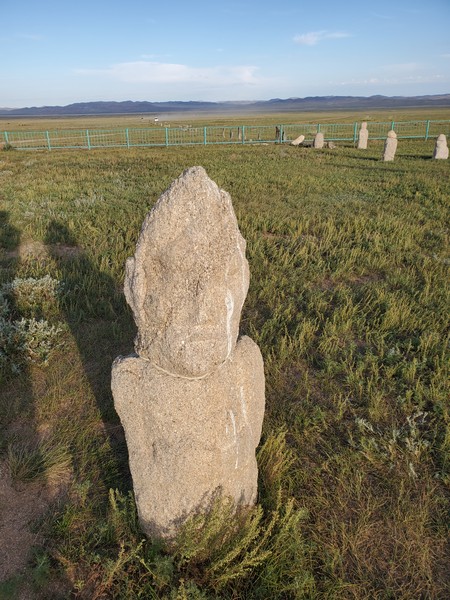
It took 45 minutes of offroading to get to the Ungut site, with dozens of carved ancient stones in the shape of humans and animals.
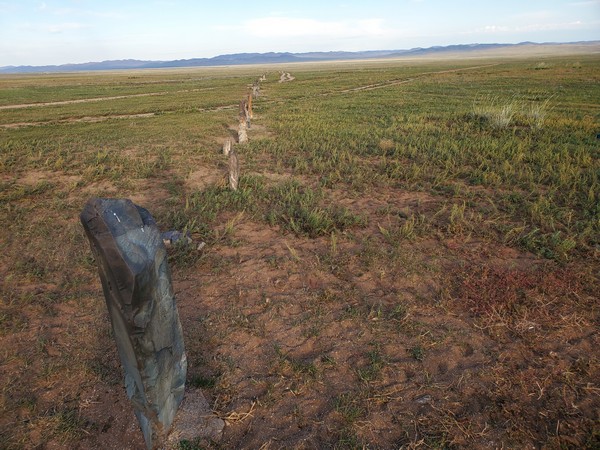
A line of 552 standing stones stretches over a mile, a symbolic funerary and commemorative path honoring a high-ranking nobleman or ruler.
Back in UB
Back in Ulaanbaatar (aka UB) we attended an excellent music and dance performance that included throat singing.
At our farewell dinner we shared highlights of the trip. Here is Jagga saying a few words in Mongolian, a gentle-sounding language.
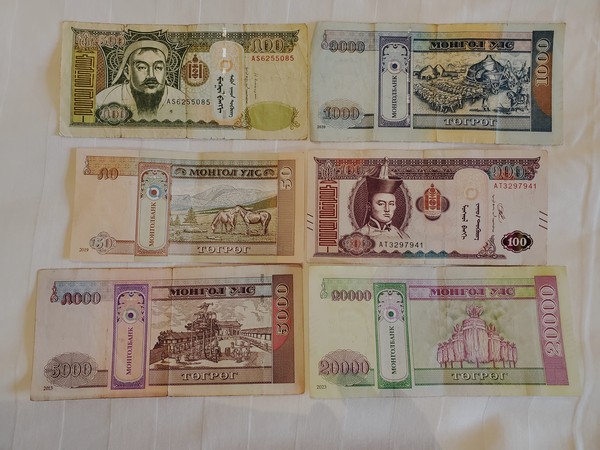
Mongolian tugrug. There are no coins. 20,000 is about $5.50.
When I returned home, I wrote this short song about Mongolia. It's called "Nomad Dreams."
Korea
I flew through Seoul, South Korea, on my way to and from Mongolia. Each way, I signed up for a free transit tour offered by the airport. A bus and English-speaking guide picked us up at the airport and took us to several sites, then returned us to the airport a few hours later.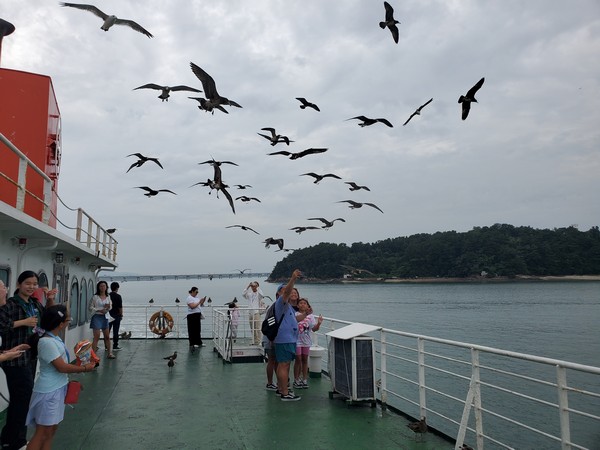
My outbound tour was called "Fun with Seagulls." We took a ferry ride to an island, and along the way we could feed shrimp crackers to the gulls.
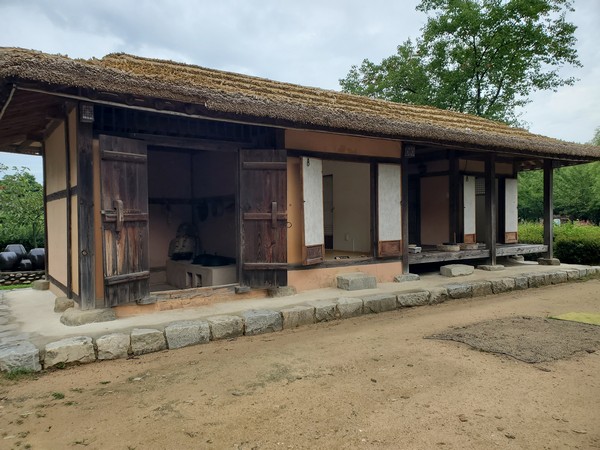
Wolmi Park was built to preserve Korean Heritage homes and culture. A hanok is a traditional Korean house built with natural materials like wood, stone, and earth.
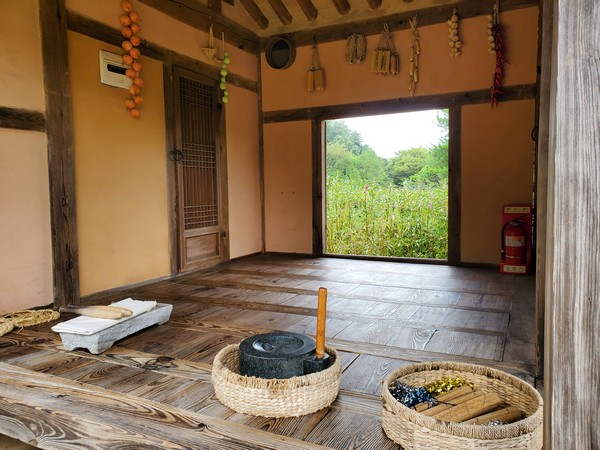
Open porches let summer breezes blow through in the hot, humid climate.
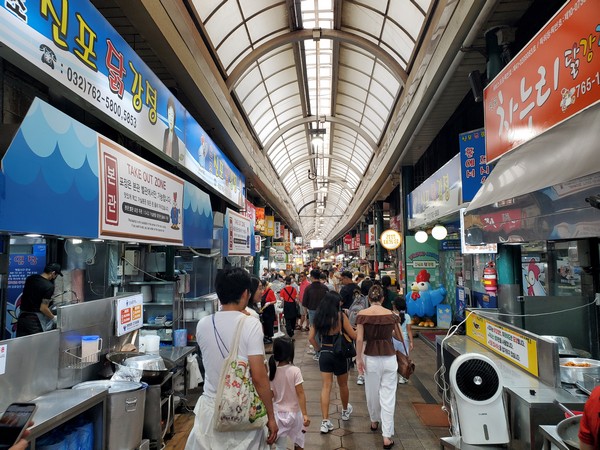
Sinpo Market in Incheon city has been in operation since the 1800s.
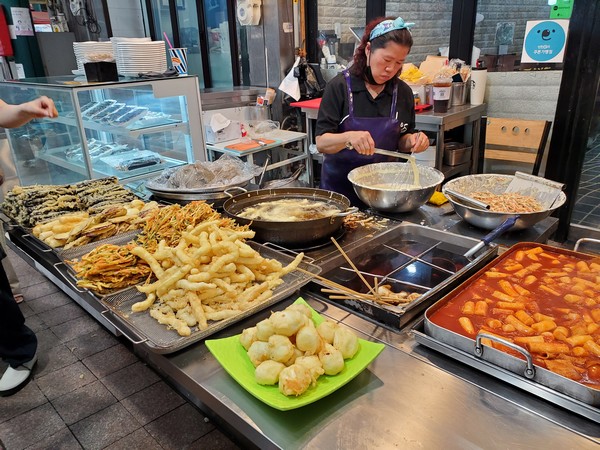
Twigim is the Korean version of tempura, with a heavier batter.
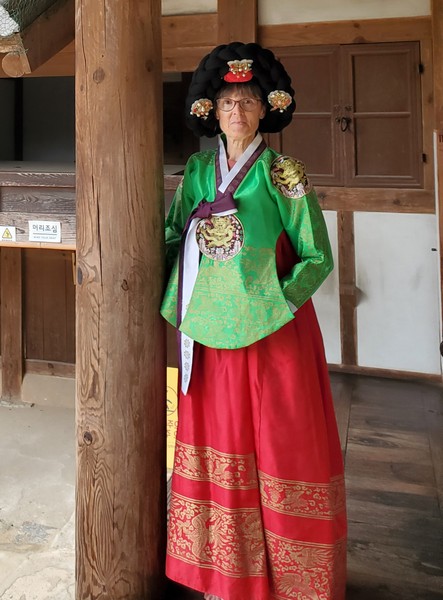
Traditional hanbok outfit worn by royalty
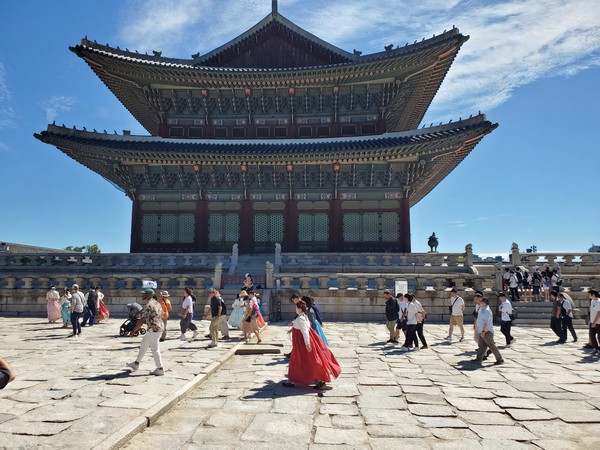
On my return layover I did the "Royal Heritage and Charm" tour to a palace and market. Gorgeous Gyeongbokgung Palace was built in 1395 as the official palace of the Joseon dynasty. Many locals and tourists dress in beautiful traditional "hanbok" outfits for photo shoots. It was perfect early fall weather.
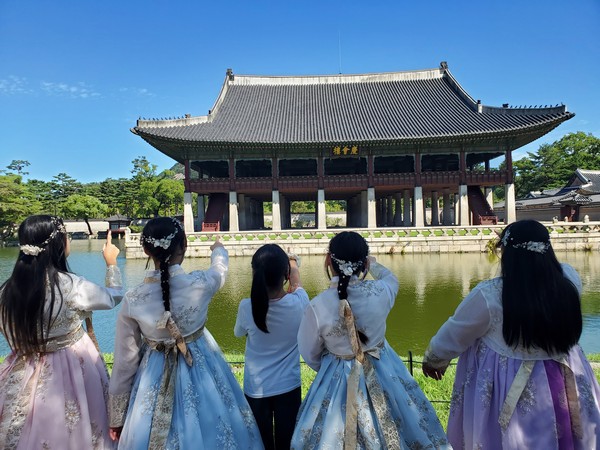
Girls in hanboks at the Gyeonghoeru Pavilion
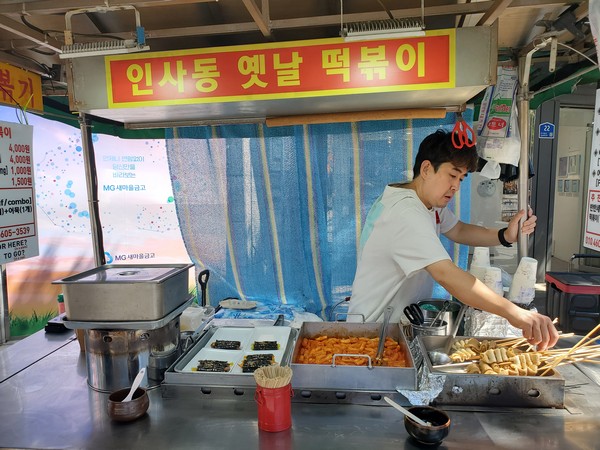
Street food booth selling fish cakes and chewy tteokbokki rice cakes simmered in a sweet and spicy chili sauce.
Costs
15-day all inclusive tour: $3771 (sale price)
Flight: $1424
Required traveler's insurance: $224
Miscellaneous (tips, snacks, non-included meals and entrance fees, extra hotel night): $317
Total: $5736